Archaeologists excavating the Roman city of Caraca near Driebes, in Spain’s Guadalajara province, have identified the remains of a temple in a part of the ancient settlement previously associated with public architecture. The discovery was announced on October 30, 2026, after new excavations revealed a structure interpreted as a sanctuary. The temple’s identification adds a religious dimension to an archaeological site whose urban layout has only gradually become visible.
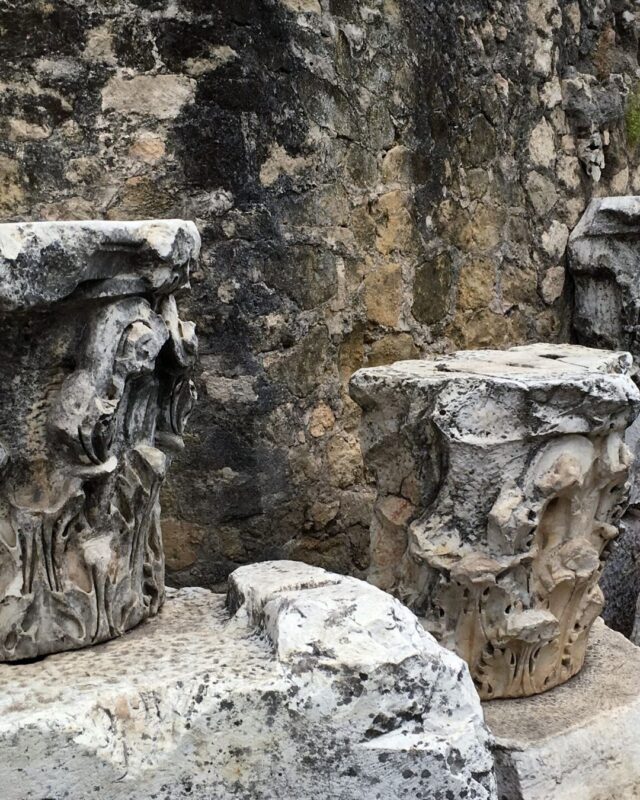

Caraca occupied an important position in the Roman-era landscape of central Iberia. The ancient town was long known from written and geographical references, while its precise location was debated until archaeological and geophysical research at Driebes strengthened the identification. Excavations have since exposed elements of streets, domestic spaces and civic buildings. A sanctuary near this public center invites new questions about how the town’s inhabitants organized political, social and ritual life.
The newly reported architectural evidence points to a Roman temple, but the excavators have not identified the deity to whom it was dedicated. That distinction is essential. A building can be classified through its plan, location and archaeological features without yielding a name, cult statue or definitive dedicatory inscription. The absence of such evidence means that specific claims about the worship of Jupiter, Diana, a local divinity or any other god would be conjecture rather than a documented conclusion.
Roman religious life was not a single uniform system imposed identically throughout the empire. Civic communities maintained public ceremonies, honored deities associated with Roman institutions and sometimes continued or adapted older regional customs. A temple in Caraca could have participated in that complex religious environment, but reconstructing its rites will require further excavation, examination of the surrounding finds and comparison with better-documented sanctuaries.
The discovery also demonstrates why archaeological mysteries need not imply supernatural events or lost civilizations. Here, the central unknown is historically meaningful: a place of worship may have been recognized without the identity of the god being known. Future inscriptions, votive objects or architectural fragments could change the interpretation. Until then, the uncertainty is a genuine feature of the evidence, not a gap that should be filled with an attractive story.
Recent work at a Roman cave sanctuary in Spain shows what can happen when inscriptions do preserve a divine name and traces of worshippers. Caraca currently presents the reverse situation: the probable sacred building is visible, but the religious identity remains elusive. Together, the finds illustrate how evidence for ancient belief can survive in different forms.
References
- EFE report on the excavation and archaeologists’ statements, October 30, 2026: Hallan un templo romano en las excavaciones de la antigua ciudad de Caraca.
- HeritageDaily, October 30, 2026: Traces of Roman temple unearthed in Caraca.