Seventh House in Astrology: Quick Meaning
| House name | Seventh House (7th House) |
|---|---|
| Primary topics | Marriage, serious one-to-one relationships, business partnerships, agreements, negotiation and open adversaries |
| House classification | Angular |
| Classical meaning | The setting place on the western horizon; traditional house of marriage and known opponents |
| Modern analogy | Libra and Venus form modern analogies, not universal rulers |
| Opposite house | First house: self, physical presence and personal initiative |
| Actual ruler | Planet ruling the natal sign on this house’s cusp |
| Full chart context | Accurate birth time, house system, cusp degree, ruler, house planets, aspects and relevant angles |
What Does the Seventh House Mean in Astrology?
The seventh house concerns significant others encountered directly: spouses, committed partners, business associates, negotiators and even open rivals. It is the house across from the Ascendant, marked by the Descendant in common quadrant systems, and introduces the relationship between the individual and another person.
Modern astrology sometimes discusses projection and the qualities people recognize through their partners. Traditional astrology places stronger emphasis on marriage, agreements, disputes and the identity of the other party. Neither approach can prove compatibility or forecast a relationship’s duration.
Traditional and Modern Interpretations of the Seventh House
The seventh is angular and associated with the setting point of the zodiac on the western horizon. Classical authors assign it marriage, spouses, partnerships, lawsuits and open enemies—adversaries whose positions are known, rather than hidden sources of conflict.
Its familiar link to Libra and Venus is a modern analogy. An actual Descendant can fall in any zodiac sign, opposite the rising sign, and the ruler of that sign governs the seventh. In Whole Sign houses the Descendant degree may not be the house cusp in the quadrant-system sense.
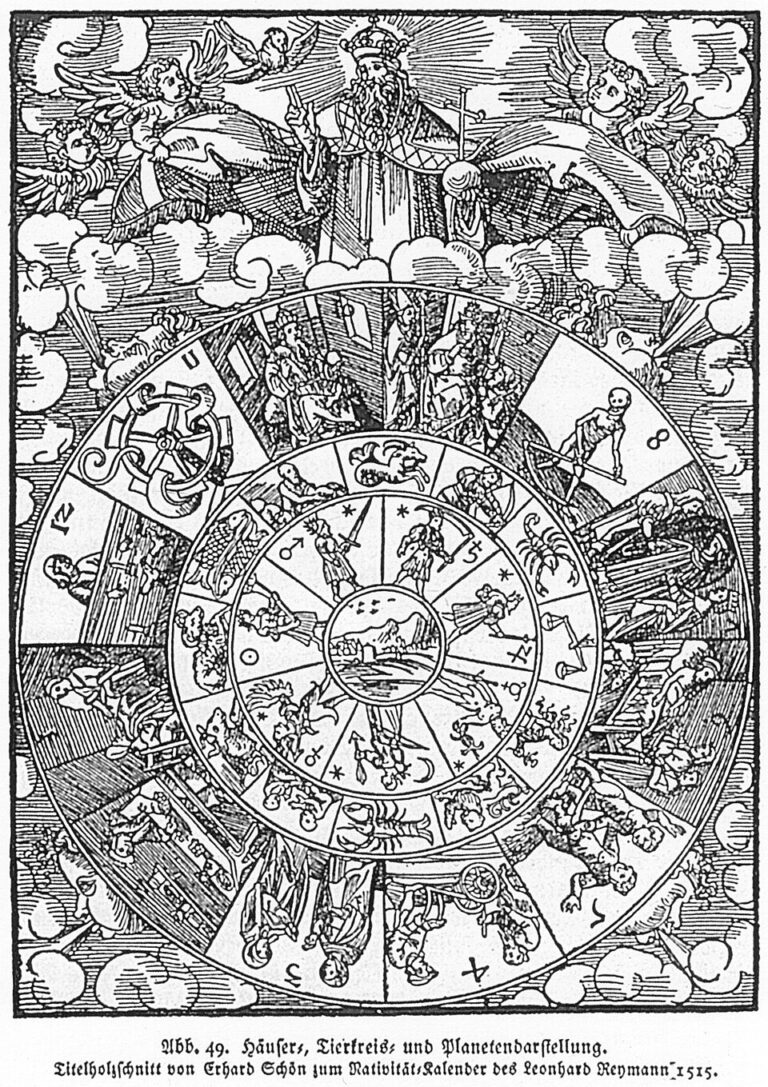
House topics, zodiac signs and planetary functions
House, sign and planet are separate features of a horoscope: the house marks a subject of life, the zodiac sign qualifies a symbolic style and a planet supplies an interpretive function. The actual cusp sign determines the ruler of this house. A modern natural-sign analogy is not an instruction to assign a particular sign or planetary ruler to everyone.
The Descendant and the First–Seventh House Axis
The Ascendant represents the eastern horizon and the starting point for reading the individual; the Descendant lies opposite on the western horizon. In Placidus and other quadrant systems it usually defines the seventh cusp. In Whole Sign houses the entire sign opposite the rising sign is the seventh, with the Descendant degree located inside it.
The axis is useful because it separates one’s own manner of entering life from the conduct of relationships requiring mutual response. A strong emphasis on one side does not imply a lack of autonomy or a guaranteed need for a partner.
Marriage, Commitment and Long-Term Relationships
The seventh traditionally includes marriage and formalized partnerships. Modern readers often widen this to long-term consensual unions and the ongoing negotiation of responsibilities, boundaries and expectations. The fifth house is more closely associated with courtship, pleasure and early romance.
A seventh-house ruler in the fourth might be interpreted in relation to shared domestic life, whereas a ruler in the ninth could introduce themes of cross-cultural exchange or guiding beliefs. Such images do not establish the identity or intentions of a future spouse, and they are not evidence that a relationship is safe or suitable.
Business Partners, Contracts and Open Adversaries
A business partnership also involves two parties making promises, dividing responsibilities and dealing with disagreement. That makes contracts, negotiation, agents and direct professional collaboration relevant seventh-house topics.
Traditional authors also include opponents in legal disputes and openly acknowledged adversaries. The shared principle is an identified counterpart whom the person meets face to face. This is different from the twelfth house’s historical subject of hidden enemies, and it is not permission to accuse anyone of hostile motives because of a chart.
The 7th House in All Twelve Zodiac Signs
Any zodiac sign can appear at the cusp of the 7th house, according to a chart’s birth details and house system. The following overview describes possible styles for approaching committed partnership, contracts and one-to-one negotiations, the Descendant and public opposition. It is not a fixed personality test. Always continue by examining the house ruler and any planets placed inside.
| Sign on cusp | Traditional ruler | Interpretive meaning |
|---|---|---|
| Aries | Mars | Direct, energetic partnerships and an emphasis on personal autonomy; Mars is the ruler. |
| Taurus | Venus | Patience, consistency and practical promises in one-to-one bonds; Venus is the ruler. |
| Gemini | Mercury | Conversation, varied perspectives and negotiation through information; Mercury adds context. |
| Cancer | Moon | A preference for emotional familiarity and protective reciprocity; the Moon rules. |
| Leo | Sun | Warmth, recognition and visible loyalty within partnership; the Sun rules. |
| Virgo | Mercury | Detailed agreements, practical support and scrutiny of commitments; Mercury rules. |
| Libra | Venus | Mutual consideration, balance and aesthetics in relational choices; Venus rules. |
| Scorpio | Mars (traditional); Pluto (modern) | Privacy, intensity and the explicit negotiation of trust; Mars traditionally rules. |
| Sagittarius | Jupiter | Shared adventures, principles or learning across cultures; Jupiter is ruler. |
| Capricorn | Saturn | Clear responsibilities, structured commitments and attention to durability; Saturn rules. |
| Aquarius | Saturn (traditional); Uranus (modern) | Freedom, equality and unconventional relationship terms; Saturn traditionally rules, Uranus modernly. |
| Pisces | Jupiter (traditional); Neptune (modern) | Empathy, imagination and spiritual ideals, with emphasis on consent and clarity; Jupiter rules traditionally. |
How to Find the Ruler of Your 7th House
Calculate your birth chart using the most accurate birth time and place available, find the sign on the 7th house cusp, then locate that sign’s ruler by house, sign and aspects. For Scorpio, Aquarius and Pisces, traditional and modern rulers differ: Mars/Pluto, Saturn/Uranus and Jupiter/Neptune respectively. State the astrological system being used rather than silently exchanging rulers.
Why house systems affect the reading
Whole Sign houses begin with the entire rising sign as the first house. Placidus and other quadrant systems divide the chart using intermediate cusps, often creating houses of unequal widths. The same planet can therefore be assigned to a different house depending on the chosen method. Keep a single house system consistent throughout an interpretation; an inaccurate birth time can affect the result as well.
What Do Planets in the 7th House Mean?
A planet occupying the 7th house adds its symbolic functions to the house’s particular topics. Read the placement through the planet’s own sign, condition and aspects; the meanings below are starting points rather than guaranteed events.
- Sun in the 7th house: A relationship may form a prominent part of self-definition; the Sun’s aspects refine the emphasis.
- Moon in the 7th house: Emotional responsiveness, security and the negotiation of needs within close partnership.
- Mercury in the 7th house: Talk, debate, contracts or exchanging ideas as central features of one-to-one dealings.
- Venus in the 7th house: Harmony, affection and fairness as relational aims; personal boundaries remain necessary.
- Mars in the 7th house: Competitive energy and direct conflict management, requiring cooperation rather than domination.
- Jupiter in the 7th house: A desire for generosity, learning and shared expansion in committed relationships.
- Saturn in the 7th house: Careful commitment, realistic obligations and patient building of trust over time.
- Uranus in the 7th house: An interest in flexible, autonomous or unconventional partnership arrangements.
- Neptune in the 7th house: Idealization, compassion and imaginative connection, balanced against the need for verified expectations.
- Pluto in the 7th house: Themes of influence, intimacy and power that invite explicit negotiation and consent.
A stellium in the 7th house
A stellium means several planets gathered in one house or sign, although schools differ on its minimum size. A 7th-house stellium introduces multiple planetary concerns into the same field of life. Check whether the planets truly conjoin and which ones are dignified, angular, retrograde or otherwise conditioned before calling the concentration uniformly beneficial or harmful.
What if Your 7th House Is Empty?
An empty seventh house does not imply permanent singleness, divorce or an absence of important relationships. Read the sign on its cusp, the ruler and aspects. With Aquarius on the Descendant, Saturn remains the traditional ruler even if a modern interpreter also examines Uranus; the natal placement of those planets adds further context.
Because twelve houses contain the ten commonly used planets plus any optional points, empty houses are ordinary. Being empty does not nullify a house: it still has a sign and ruling planet. A setting that includes lunar nodes, asteroids or hypothetical points may display different occupants, so always state what was counted.
The Seventh House and the Opposite House
Its opposite house adds a complementary domain: First house: self, physical presence and personal initiative. Reading the two together helps distinguish types of experiences that might otherwise be confused. An opposition in the chart is not a judgment that one person’s life is unbalanced. It is an interpretive relationship between two life subjects, shaped further by their rulers.
How to Interpret the 7th House in Your Natal Chart
- Use recorded birth details. Verify time, date and birthplace rather than relying on a solar chart.
- Identify the house system. Make the method explicit before interpreting cusps and planet assignments.
- Locate the cusp sign and degree. Check whether an angular point is involved.
- Find the house ruler. Read its sign, house, major aspects and traditional or modern rulership.
- Inspect planets inside the house. Interpret their different functions instead of merging them into one label.
- Synthesize context. Compare the opposite house and other relevant factors without using the horoscope as proof of events.
Worked Example: Reading the Seventh House
Take an Aries Ascendant and Libra Descendant with Venus, ruler of the seventh, in the eleventh. The interpretation could consider shared friendships, groups or collaborative projects as the setting in which partnership themes are experienced. A square from Mars might invite reflection on negotiation and independence; it does not forecast an argument or failure.
This is a hypothetical interpretation, not an individual’s calculated chart. The purpose is to illustrate how one moves from a house topic to its ruler, planetary aspects and the rest of the chart.
Natal 7th-House Placements vs Transits
A natal 7th house belongs to the horoscope of birth. Transiting planets move through the current sky and may cross that natal house or aspect its ruler or occupants. Astrologers interpret these as temporary contexts, but a transit does not change the natal house or reliably forecast a specific relationship, illness, journey, financial event or career outcome.
Common Misconceptions About the Seventh House
- The seventh is not limited to romance; contracts, business associates and direct opponents also belong here.
- An empty seventh does not mean a person cannot marry or sustain a relationship.
- Libra and Venus are not the actual seventh-house sign and ruler for every chart.
- A seventh-house placement cannot prove what a real or future partner thinks or will do.
Practical Reflection
Consider how the subjects of committed partnership, contracts and one-to-one negotiations, the Descendant and public opposition appear in observable daily life. Ask which responsibilities and choices are actually within your control, and compare the symbolic house interpretation with verifiable facts. A chart is an interpretive framework, not evidence about someone’s health, relationships or future.