Researchers are attempting to give computers a new role in reading some of South Asia’s most important ancient inscriptions. A project announced in October 2026 combines digital image restoration, optical character recognition, transliteration and machine translation to help interpret texts written in Ashokan Brahmi. Its ambitions are considerable, but the story is not that artificial intelligence has suddenly decoded a lost language. It is that difficult, weathered historical evidence might become more accessible to specialists with carefully tested computational assistance.
The project appears in an October 7 preprint titled InscriptionOCR: A Dataset and Method for Understanding Inscriptions, by Jaidev Sanjay Khalane, Akbar Ali, V. N. Prabhakar and Shanmuganathan Raman. The authors describe an end-to-end workflow designed for images captured directly from stone inscriptions, often damaged, unevenly lit or difficult for automated systems to recognize.
Ashokan Brahmi is closely associated with the edicts of Emperor Ashoka of the Mauryan dynasty, who ruled much of the Indian subcontinent in the third century BCE. His inscriptions, frequently written in forms of Prakrit, provide crucial evidence of governance, moral communication and the language of kingship. They also reveal how a ruler addressed diverse communities across different regions.
The texts are especially important to the history of religion because they offer direct, datable evidence of Ashoka’s presentation of dhamma, a term often discussed in relation to ethical conduct, duties, nonviolence and moral governance. Scholars debate its nuances across inscriptions and contexts. That complexity is one reason why a computer-generated English translation should never be treated as a final interpretation.
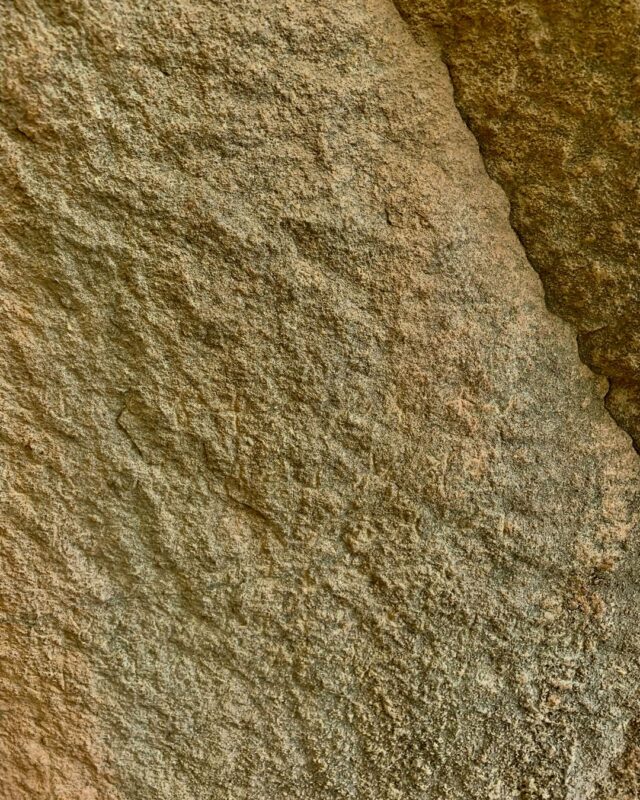
The technical challenge begins before translation. Inscribed letters can be partially erased by erosion, hidden by cracks or visually confused with natural patterns in the stone. The project therefore starts by enhancing photographs and isolating letter-like forms. It then aims to recognize characters, transliterate them into Roman script and generate English renderings from Prakrit.
According to the authors, the InscriptionOCR dataset contains more than 200,000 character images distributed across roughly 600 classes. They also introduce a Prakrit-English bilingual corpus with more than 2,000 paired sentences intended to support translation research. Those figures describe resources presented by the research team, not independently certified coverage of the full surviving corpus of Brahmi inscriptions.
This work sits at the intersection of archaeology, linguistics and computer science. A machine can scan many possible letter shapes consistently and offer candidate readings where a human reader might spend considerable time examining a poor photograph. But the task of understanding an inscription extends far beyond converting shapes into letters.
An inscription has a physical location, an archaeological context, a writing style, a historical audience and often political or religious conventions. A letter incorrectly reconstructed near a damaged section can change a word, while a grammatically plausible translation may still miss an important nuance. Epigraphists must therefore compare automated proposals with the original stone, parallel inscriptions and the best available scholarship.
The strongest use of these tools may be as a second pair of eyes. A computational system can make patterns easier to inspect and may suggest alternatives worth checking, particularly when materials are dispersed across archives. Its outputs become most valuable when they make human evaluation more transparent rather than replacing it.
Because the October paper is a preprint, its methods and claimed performance should also be examined independently. A large training dataset is not automatically representative of rare letter forms, local scripts or unusual damaged surfaces. Generalization across sites and photographic conditions is an open practical question, and machine translation in a low-resource ancient language carries substantial uncertainty.
There is a broader philosophical implication here. Ancient inscriptions were created to communicate across time, yet their survival depends on the accidents of material durability and the changing abilities of readers. Digital methods can extend our capacity to recover a message without removing the need to ask who authored it, what it meant in its own historical world and how later interpreters may misunderstand it.
The edicts of Ashoka are not simply data awaiting extraction. They are historical arguments about authority and conduct, preserved in stone and addressed to people who lived more than two millennia ago. AI may help scholars recover their wording; careful historical interpretation remains essential for understanding their significance.
References
https://arxiv.org/abs/2610.09439 — Khalane, Ali, Prabhakar and Raman, InscriptionOCR, October 7, 2026, research preprint.