The Badger spiritual meaning centers on persistence, grounded strength, boundaries and the ability to dig beneath a surface problem. Badgers are powerful, low-built mammals adapted for excavation. European badgers can live in extensive underground setts and, especially in Britain, may form social groups while still foraging largely on their own. That combination gives the Badger a richer symbolism than simple aggression: home and community matter, but so do independent work, territorial knowledge and the patience required to build something underground over time.
This guide keeps three different layers visible: the animal’s real behavior, documented cultural material and modern spiritual interpretation. That prevents a symbolic reading from turning folklore into zoology or presenting a recent interpretation as a universal ancient tradition.
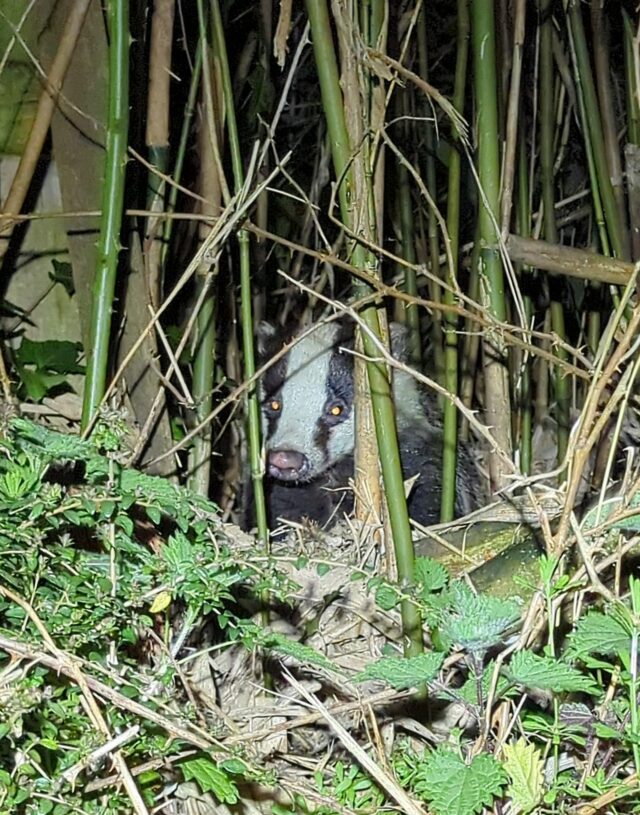
Badger spiritual meaning: quick guide
| Core meanings | Persistence, boundaries, digging to the root, home, tenacity, grounded confidence and independent effort |
| Shadow meanings | Stubbornness, territoriality, isolation, digging into a conflict after it has stopped being useful and mistaking persistence for wisdom |
| Spirit animal lesson | Stay with difficult work long enough to reach the root, but know when persistence has become entrenchment |
| Best interpretive method | Begin with species, behavior and context; use symbolism as reflection rather than prediction |
What does a Badger symbolize?
Digging is the most obvious biological foundation for Badger symbolism. Strong forelimbs and claws allow badgers to excavate setts, search for food and alter the ground around them. Some long-established setts can become complex systems used across generations. Spiritually, this supports themes of foundations, roots and work that develops below public view.
European badgers in Britain can live in clans, yet individuals usually forage separately rather than hunting as a coordinated pack. This makes the animal an interesting symbol of belonging without losing autonomy. Community does not require every task to become collective.
Badgers are also associated with persistence because of their robust build, digging ability and determined behavior when threatened. But persistence is only useful when the direction remains sound. The shadow meaning is entrenchment: continuing because stopping would feel like defeat rather than because continuing still serves the goal.
The underground sett adds a boundary theme. A secure home can support exploration because the animal has a place to return to. In a spiritual reading, Badger asks whether your boundaries are building a stable base or merely reducing contact with the world.
Badger as spirit animal, totem and power animal
As a modern spirit animal, Badger can become relevant when a task requires staying power: research, rebuilding, long-term craft, protecting a home or working through a problem that will not yield to superficial effort. The message is less “fight harder” than “dig accurately and keep going.”
As a power-animal image, Badger represents concentrated force close to the ground. It is useful symbolically when you need to hold a boundary, defend a foundation or work through resistance without seeking external applause.
People drawn to Badger symbolism may identify with independence, privacy, loyalty to a place and the willingness to continue when others lose interest. The shadow can be irritability, territorial defensiveness or an inability to abandon an unproductive argument.
The social structure of European badgers also adds nuance: even within a clan, much of daily foraging is individual. Badger symbolism can therefore support people who need community but do their best work alone. Independence and belonging are not mutually exclusive.
The terms spirit animal, totem and power animal are often merged in modern writing, but they are not historically interchangeable. “Totem” belongs to specific Indigenous systems and should not be used as a generic label detached from those cultures. This page therefore treats the Badger mainly as a contemporary symbolic figure. See Spirit Animals, Totems & Power Animals for the distinction.
What does it mean when you see a Badger?
Badgers are often active at night, so direct sightings may be brief. In Britain and parts of Europe, signs such as paths, latrines and sett entrances can reveal their presence even when the animal remains unseen. Symbolically, this can emphasize hidden structure: the visible sign may belong to a much larger system underground.
A Badger digging can represent investigation or foundation work. One moving confidently along a familiar path can symbolize territorial knowledge and routine. A Badger at a sett entrance can emphasize the threshold between private refuge and public activity.
Roadside sightings or injured animals require practical wildlife response rather than symbolic interpretation. In the UK, badgers and their setts also have legal protections, so disturbance should never be justified by spiritual curiosity.
In dreams, a Badger may represent a problem that needs deeper examination, stubbornness, privacy or defense of home. Digging beside one can symbolize getting to the root. Being chased may reflect conflict with a force that will not easily yield. A calm Badger returning to its sett can represent confidence in a secure base.
A wildlife encounter is not automatic proof of an omen. First ask why the animal may be present and what it is actually doing. Only then use the encounter, if useful, as a mirror for a real decision, relationship or pattern.
Badger in folklore, myth and cultural symbolism
Badgers have a long place in British and European rural culture, literature and folklore. Their underground homes, nocturnal habits and striking faces made them familiar but somewhat hidden animals. Modern cultural portrayals range from fierce persistence to dignified domesticity, showing how different stories select different aspects of the same species.
Claims about a single “Celtic Badger meaning” should be handled carefully. Celtic-speaking cultures, periods and regions were not one unified symbolic system, and modern summaries often repeat unsourced claims. Where older traditions are discussed, they should be tied to a specific text, region or archaeological context.
Today’s British symbolism is also shaped by conservation, law and debates over wildlife management. Badger Trust and research organizations emphasize complex social behavior, long-lived setts and the pressures created by roads, development, persecution and disease policy. These are modern realities that legitimately affect what the animal represents now.
Species and behaviors: how the meaning changes
“Badger” covers animals in several lineages and regions. The European badger, American badger, honey badger and Asian badgers differ in ecology and social behavior. The European badger shown here is often more social than the American badger, which is generally more solitary.
That difference changes symbolic emphasis. European Badger imagery can combine clan, home and independent foraging. American Badger imagery emphasizes solitary excavation and hunting. Honey badger symbolism is often dominated by cultural reputation for boldness, but it should not be projected onto every species called a badger.
Behavior also matters: digging means investigation or construction; sett maintenance means continuity; solitary foraging means self-directed work; scent marking and territorial behavior emphasize boundaries; social grooming can emphasize bonds within the group.
The practical spiritual lesson of the Badger
The Badger asks whether you are persistent for the right reason.
- Dig deeper when the surface explanation is repeatedly failing.
- Build a secure base that supports independent action rather than isolation.
- Stay with long work when progress is real but slow.
- Stop digging when the evidence shows the tunnel is going nowhere.
- Protect territory without treating every nearby person as an intruder.
The deepest Badger symbolism is persistence with structure. Strength matters, but the more interesting power is cumulative: repeated digging becomes a sett, familiar paths become a territory and individual effort can exist inside a durable social world.
For the wider context, continue with Mammal Symbolism. The strongest interpretation keeps the living animal visible: biology supplies the pattern, documented history supplies cultural context and the spiritual layer remains clearly identified as interpretation.
References
Web References
- https://www.badgertrust.org.uk/badgers
- https://www.badgertrust.org.uk/education
- https://animaldiversity.org/accounts/Meles_meles/
Image Reference
https://commons.wikimedia.org/wiki/File:Badger_(Meles_meles).jpg