The Blue Jay spirit animal is usually associated with a strong voice, intelligence, vigilance, protection, and the courage to defend what matters. Its meaning grows naturally from the bird itself: Blue Jays are conspicuous, highly vocal corvids with complex social behavior, close family bonds, and a reputation for confronting threats much larger than themselves.
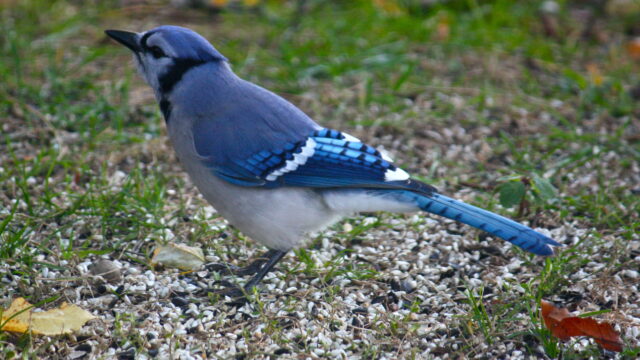
That does not mean every modern interpretation is ancient. The Blue Jay, Cyanocitta cristata, is native to North America, so claims that it carried a specific symbolic meaning in ancient Greek, Roman, Celtic, Norse, or Asian traditions should be treated with caution. There are documented North American traditions involving the bird, alongside later folklore and modern spirit-animal interpretations, but they belong to different historical contexts.
This guide follows the same principle used throughout our Spirit Animals, Totems & Power Animals collection: begin with the animal, distinguish documented traditions from later spiritual interpretation, and then ask what the symbol can mean in the context of an actual encounter.
Blue Jay spirit animal: quick meaning
| Animal | Blue Jay (Cyanocitta cristata) |
|---|---|
| Core themes | Communication, courage, intelligence, vigilance, loyalty, protection |
| Spirit animal meaning | Use your voice clearly, remain alert, and defend what truly deserves your energy |
| Totem themes | Resourcefulness, social intelligence, persistence, expressive personality |
| Power animal themes | Confidence, boundaries, strategic communication, protection |
| Shadow side | Aggression, gossip, excessive defensiveness, noise without purpose |
| When you see one | Consider what requires attention, honest communication, or firmer boundaries |
What does a Blue Jay symbolize?
The most convincing symbolic meanings of the Blue Jay come from qualities that can actually be observed. Blue Jays are members of the corvid family, which also includes crows, ravens, and magpies. Like many corvids, they are intelligent, adaptable, and socially complex. They use a wide variety of calls, can imitate the cries of hawks, store food for later, and communicate not only through sound but also through body posture and the position of their crest.
That makes communication one of the most natural meanings attached to the bird. A Blue Jay does not disappear quietly into the background. Its presence is often announced by sound before the bird itself is seen. In modern spiritual interpretation, this has become a reminder to speak clearly, name what is happening, and avoid shrinking from a conversation simply because it is uncomfortable.
But communication is only one side of the symbol. Blue Jays are also known for defending nests and territory, sometimes mobbing hawks, owls, and other perceived threats. This gives the bird a second important theme: protection and boundaries. Spiritually, the Blue Jay can represent the difference between passive silence and active defense. The lesson is not necessarily to become confrontational, but to recognize when avoiding conflict allows something important to be damaged.
Jay species and spiritual differences
Steller’s Jay Spiritual Meaning
The Steller’s Jay shares the Blue Jay’s corvid themes of intelligence, communication, confidence and adaptability, but its darker head and western woodland habitat give it a distinct visual and ecological identity.
Scrub Jay Spiritual Meaning
Scrub Jays emphasize memory, resourcefulness, preparation and adaptability. Their food-caching behavior makes memory especially relevant symbolically: what is stored, remembered and recovered later can become a metaphor for planning and learning from experience.
California Scrub Jay Spiritual Meaning
The California Scrub Jay adds strong regional identity to the broader Scrub Jay pattern. Spiritually, it can emphasize local awareness, adaptability, memory and the ability to thrive within a familiar territory while remaining alert to changing conditions.
These jays belong to the wider Corvid Symbolism family, but each species should be interpreted through its own behavior and habitat rather than treated as interchangeable.
Blue Jay as a spirit animal, totem, and power animal
Modern spiritual writing often uses the expressions spirit animal, totem animal, and power animal as if they were interchangeable. Historically, they are not. “Totem” belongs to specific Indigenous cultural contexts, while the broad personal-development meaning commonly found online is largely modern. For that reason, it is more accurate to describe the following as a contemporary symbolic framework rather than as one universal Native American teaching.
As a spirit animal, the Blue Jay can be interpreted as a temporary guide toward clearer expression. It may feel especially relevant when you know what you think but have difficulty saying it, when a boundary has become unclear, or when a situation requires both intelligence and courage. The bird’s message is not simply “speak louder.” Blue Jays are capable of many different calls; the deeper analogy is learning which voice a situation actually requires.
As a modern totem symbol, the Blue Jay is often associated with people who are curious, outspoken, observant, protective, and strongly connected to their social circle. The positive form of this personality is loyal and resourceful. The shadow form can become argumentative, territorial, or too eager to comment on everything. The bird therefore makes a useful symbol for balancing expression with discernment.
As a power animal, the Blue Jay can represent confidence before a difficult conversation, the ability to defend a person or project, or the strategic intelligence needed to recognize danger without becoming consumed by it. This is less about supernatural prediction than about using the animal as a focused symbolic image: voice, vigilance, preparation, and courage working together.
What does it mean when you see a Blue Jay?
Seeing a Blue Jay does not automatically mean that the universe is sending a fixed message. Blue Jays are common across much of eastern and central North America, and a sighting may simply reflect habitat, season, food, or nesting behavior. Symbolic interpretation becomes more useful when the circumstances are unusual or personally significant.
If a Blue Jay repeatedly appears during a period when you are avoiding an important conversation, its vocal nature may make communication the most relevant theme. If the bird appears while you are dealing with conflict, its defensive behavior may suggest boundaries rather than aggression. If you are preparing for a long project or uncertain future, its habit of caching food can suggest planning ahead and trusting disciplined preparation.
A Blue Jay crossing your path can therefore be read through three questions:
- What was happening immediately before the encounter? The question already on your mind often matters more than a generic symbolism list.
- What was the bird actually doing? Calling, feeding, defending territory, flying alone, or moving with other jays all create different symbolic associations.
- Which meaning is supported by the situation? Communication, protection, resourcefulness, vigilance, and social bonds are all plausible themes, but not every encounter needs all of them.
This same method applies throughout our wider guide to Animal Encounters & Omens: begin with context before turning an animal into a prediction.
Blue Jay symbolism in folklore and older sources
Because the Blue Jay is a North American species, its historically documented symbolism is also North American. One of the most useful early ethnographic references appears in James Mooney’s Myths of the Cherokee, published in 1900 from fieldwork conducted among Cherokee communities. Mooney records a specific household charm involving water in which a Blue Jay feather had been soaked, used in connection with making a child an early riser. This is valuable evidence precisely because it is specific. It does not establish a universal “Blue Jay totem meaning” for all Indigenous peoples.
The bird also acquired a vivid place in nineteenth-century American literature. In A Tramp Abroad (1880), Mark Twain devoted a humorous passage to Blue Jays as extraordinary talkers, portraying them as expressive, emotional, argumentative, clever, and almost human in their social behavior. Twain was writing literature rather than ornithology, but the passage shows that the bird’s association with communication and personality was already culturally recognizable long before modern spirit-animal websites.
Naturalists also emphasized the Blue Jay’s intelligence, boldness, and opportunism. John James Audubon illustrated the species in The Birds of America and described aspects of its feeding and behavior. Modern ornithology has refined many early observations, but the older record helps explain why qualities such as cleverness, vigilance, and assertiveness became attached to the bird.
It is therefore more accurate to say that modern Blue Jay spirituality developed from a mixture of observable bird behavior, specific North American traditions, later folklore, and twentieth-century animal-symbolism literature. It should not be projected backward into civilizations that never encountered the species.
Blue Jay meaning in love, relationships, and personal growth
In relationship readings, the Blue Jay is best interpreted through communication and loyalty rather than as a promise of romance. A sighting may encourage a direct conversation, especially when resentment or uncertainty has been allowed to build. It can also symbolize defending the relationship from outside pressure or making expectations clearer.
The Blue Jay’s shadow symbolism matters for the same reason. Boldness can become arrogance. Protection can become territoriality. Communication can become gossip. Vigilance can become suspicion. A useful animal symbol should include both sides of the trait rather than turning every characteristic into a positive affirmation.
Blue Jay blue symbolism and spiritual meaning
The Blue Jay’s blue plumage adds a strong color layer to its symbolism of communication, intelligence and social awareness. In blue bird symbolism, blue commonly emphasizes clarity, truth, perspective and the need to communicate with precision rather than noise.
Because the Blue Jay is visually identified by blue, the color is not a minor accent but part of the bird’s symbolic identity. The combination can represent speaking clearly, reading social situations accurately and remaining confident without becoming aggressive. In modern spirituality, blue is also sometimes associated with calm or the throat chakra, but those are contemporary interpretive layers rather than ancient Blue Jay traditions.
The color itself is biologically distinctive: much of the visible blue in jay feathers is structural rather than produced by blue pigment. That makes the bird an especially useful symbol of perception—what we see is real, but the mechanism behind appearance may be more complex than it first seems.
For the broader meaning of blue birds and how color modifies species symbolism, see Blue Bird Symbolism.
Dreams involving a Blue Jay can be approached in much the same way as waking encounters. A calling Blue Jay may draw attention to speech or a message; an aggressive jay may reflect conflict or defensive behavior; a quiet bird may shift the emphasis toward observation. Dream interpretation is strongest when the dreamer’s own associations are considered before applying a fixed dictionary meaning.
For the symbolism of feathers more broadly, see Feather Meanings & Symbolism. For other birds, continue through our Bird Symbolism collection.
Blue Jay as a corvid: family symbolism
The Blue Jay belongs to the Corvidae family, together with crows, ravens, magpies and other jays. This family connection adds intelligence, memory, adaptability, communication and social awareness to the Blue Jay’s more specific symbolism of voice, vigilance, courage and boundaries. Its loud calls and defensive behavior make communication especially prominent, but those traits sit inside the wider corvid pattern of learning from and responding to a changing environment.
Corvid symbolism also explains why the Blue Jay should not be interpreted only through its blue coloration. Color adds clarity and communication, while the bird’s family and behavior contribute intelligence, strategy and social complexity. See Corvid Symbolism for the broader spiritual meaning of crows, ravens, jays and magpies.
Sources and further reading
Templum Dianae books and guides
- Templum Dianae Media, Witchcraft for Beginners. For the broader relationship between symbolism, spiritual practice, and personal interpretation, see the companion guide: Witchcraft for Beginners: How to Start Practicing.
- Templum Dianae, Symbols and Meanings: Spiritual, Ancient & Sacred Symbolism Guide.
- Templum Dianae, Spirit Animals, Totems & Power Animals.
Historical and primary sources
- James Mooney, Myths of the Cherokee, Nineteenth Annual Report of the Bureau of American Ethnology, 1900.
- Mark Twain, A Tramp Abroad, 1880, chapter II, “Jim Baker’s Blue-Jay Yarn.”
- John James Audubon, The Birds of America, Plate 102, Blue Jay, 1831.
Web references
- Yale University, Audubon at Beinecke — Blue Jay (Plate 102): https://beineckeaudubon.yale.edu/news/image-and-narrative
- Spiritual Animals, historical review of Blue Jay spirit-animal claims: https://spiritualanimals.com/blue-jay-spirit-animal/
- Ask About Birds, review of Blue Jay symbolism and behavioral claims: https://askaboutbirds.com/symbolism/blue-jay-symbolism/
Image Reference
https://commons.wikimedia.org/wiki/File:Bluejay_(Cyanocitta_cristata).jpg
.jpg)