The Cougar spirit animal is commonly associated with independence, leadership, stealth, territorial awareness and the confidence to move alone when necessary. Also called Mountain Lion or Puma, the Cougar is native to the Americas and occupies habitats ranging from forests and mountains to deserts and swamps.
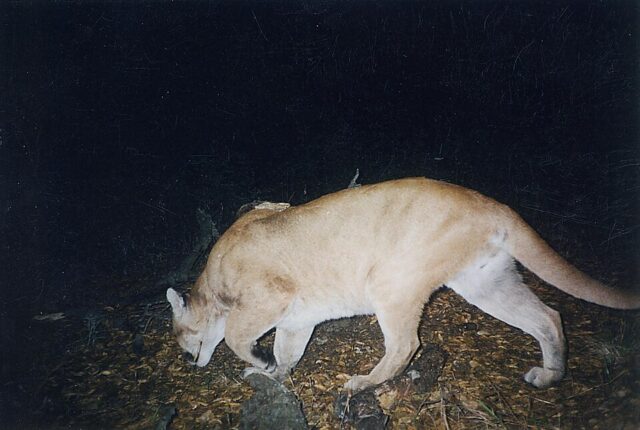
Because the animal is American, claims about ancient Celtic or Egyptian Cougar symbolism are historically impossible. The strongest older traditions belong to Indigenous peoples of North and South America, where Cougar meanings differ by community. Modern spirit-animal language draws heavily from the cat’s solitary behavior and ecological role.
Cougar spirit animal: quick meaning
| Core meanings | Independence, leadership, stealth, territory, confidence, adaptability |
|---|---|
| Shadow meanings | Isolation, domination, secrecy, predation, excessive self-reliance |
| Spirit animal lesson | Lead from self-possession rather than from the need to control others |
| Power animal themes | Confidence, leadership, boundaries, independence, strategic action |
| Repeated sightings | Notice territory, independence and the difference between solitude and isolation |
Mountain Lion Spiritual Meaning
Mountain lion spiritual meaning belongs to the same animal as Cougar: Puma concolor. The different common names reflect geography and language rather than different species. Symbolically, Mountain Lion emphasizes independence, territorial awareness, quiet leadership, stealth and confidence.
Because the animal is the same, a separate Mountain Lion page would duplicate the Cougar meaning. This page therefore absorbs Mountain Lion as a complete search and symbolic variant.
Mountain Lion Spirit Animal
As a modern spirit animal, Mountain Lion can represent self-directed leadership, strong boundaries and the ability to act decisively without constant recognition. Its shadow is isolation or using independence to justify control.
Puma Spiritual Meaning
Puma spiritual meaning is another name-based variant of Cougar symbolism. Puma, Cougar and Mountain Lion all refer to Puma concolor, so the core meanings remain independence, stealth, territorial strength, confidence and strategic action.
Puma Spirit Animal
As a modern spirit animal, Puma can symbolize quiet authority, adaptability and confidence during solitary phases. The practical lesson is to use self-reliance without refusing support when it is genuinely useful.
What does a Cougar symbolize?
The Cougar symbolizes independence because adults are largely solitary. Spiritually, this can represent confidence in personal judgment.
Stealth creates another theme. Mountain Lions can live close to human communities while remaining unseen, making hidden presence a natural symbol.
Leadership is modern interpretive language rather than a direct zoological fact. The useful version is self-command: the ability to act without constant external validation.
Cougar Spirit Animal
As a modern spirit animal, Cougar often becomes meaningful when a person needs to make a decision independently, establish territory or lead without relying on constant approval.
People drawn to Cougar symbolism may value autonomy, confidence and strategic movement. The shadow is refusing support or turning leadership into domination.
Cougar Totem Animal
In contemporary spiritual writing, Cougar as a totem is associated with independence, leadership, territory and self-possession. Totemic and ceremonial Cougar traditions belong to specific Indigenous nations and should not be generalized.
Cougar Power Animal
As a power-animal image, Cougar can support boundary-setting, confidence and decisive movement during solitary phases.
What does it mean when you see a Cougar?
A wild Cougar encounter requires safety and calm behavior according to local wildlife guidance. Symbolism comes later.
A distant Cougar may symbolize hidden power or wilderness close to ordinary life. Tracks without a sighting may emphasize presence that is known indirectly.
Repeated Cougar imagery can arise through regional identity, Indigenous art or modern wilderness symbolism.
Cougar meaning in love, relationships and dreams
In relationships, Cougar symbolism can represent independence within partnership. The shadow is emotional distance.
In dreams, a stalking Cougar may symbolize pressure, suppressed power or fear of being watched.
A calm Cougar can represent self-possession, while a caged one may symbolize constrained independence.
Mountain Lion in Pueblo and Southwestern traditions
The University of New Mexico’s Tony Hillerman Portal notes Mountain Lion roles in Keres and Tewa creation traditions and identifies the animal as a beast-god of the North in Zuni tradition. These are specific Southwestern cultural relationships rather than a universal Native American meaning.
Yale eHRAF records Jicarilla Apache myths involving Mountain Lion alongside other animals, showing the breadth of narrative traditions in which the cat appears.
South American Puma traditions add entirely different contexts, including Andean religious and political symbolism. The animal’s enormous geographic range means its cultural history should be approached regionally.
The practical lesson of the Cougar
- Independence: Which decision needs your own judgment?
- Leadership: Can confidence exist without control?
- Boundary: Which territory genuinely belongs to your responsibility?
- Visibility: What strength can remain quiet?
- Shadow: Has solitude become isolation?
Cougar symbolism is strongest when independence remains compatible with relationship. The animal’s modern spiritual lesson is self-command rather than dominance: move confidently, protect boundaries and remain capable of connection.
Explore the broader Feline Symbolism cluster for related cats and meanings.
Books, sources and further reading
Templum Dianae’s Native American Symbols and South American & Andean Symbols collections provide broader context when specific traditions are named, while Witchcraft for Beginners can frame modern personal symbolism.
Continue through Native American Symbols, South American & Andean Symbols and Mammal Symbolism.
Historical sources: Keres, Tewa and Zuni Mountain Lion traditions; Jicarilla Apache animal myths; regional Andean Puma symbolism.
Web References
- University of New Mexico, Tony Hillerman Portal — Mountain Lion: https://ehillerman.unm.edu/1815
- Yale eHRAF, Myths of the Jicarilla Apaches: https://ehrafworldcultures.yale.edu/cultures/nt26/documents/012
- Mountain Lion Foundation, natural and cultural context: https://mountainlion.org/
- https://commons.wikimedia.org/wiki/File:Puma_concolor_P-1.jpg