The Lion spirit animal is commonly associated with courage, authority, protection, sovereignty, solar power and the responsibilities that come with strength. Lions are social apex predators whose size, mane, roar and cooperative hunting made them powerful symbols long before modern spirit-animal language existed.
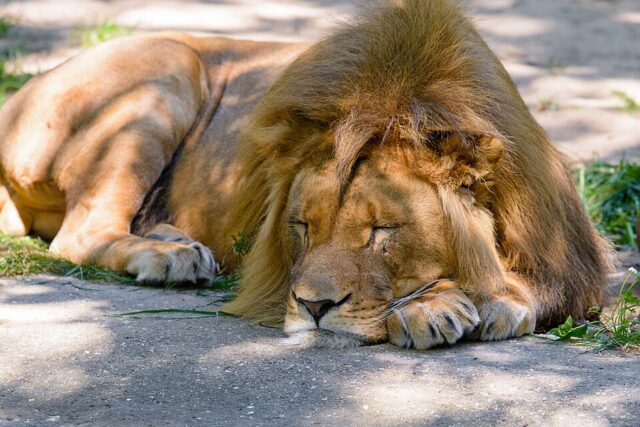
Ancient Egypt used lions as royal and protective images; Mesopotamian rulers compared themselves with lions and staged lion hunts; biblical and later Christian traditions developed the Lion of Judah; Greek myth gave Heracles the Nemean Lion. The Lion has therefore represented both protector and threat, ruler and enemy.
Lion spirit animal: quick meaning
| Core meanings | Courage, authority, protection, sovereignty, strength, solar power |
|---|---|
| Shadow meanings | Pride, domination, aggression, entitlement, theatrical displays of power |
| Spirit animal lesson | Use strength to protect and lead rather than to demand submission |
| Totem themes | Royal power, guardianship, courage, lineage, prestige |
| Power animal themes | Confidence, leadership, protection, decisive courage, self-command |
| Repeated sightings | Notice power, responsibility and whether confidence is becoming domination |
What does a Lion symbolize?
The Lion symbolizes authority because human societies repeatedly read its physical dominance as a model for rulership. Roar, mane and predatory strength made the animal visually suited to kingship, but the symbol also carries a warning: power can protect or terrorize.
Protection appears in architecture. Lions and lion-like guardians stand at gates, temples and thresholds across several ancient cultures. The animal’s threatening potential is redirected outward, defending sacred or royal space from what should not enter.
Modern courage symbolism is therefore only part of the story. Lion imagery also concerns legitimacy, hierarchy, warfare and spectacle. A spiritual reading becomes more useful when confidence is connected with responsibility.
Lion Spirit Animal
As a modern spirit animal, Lion often becomes meaningful when a person needs to occupy space more confidently or accept leadership. The lesson is not to become louder than everyone else; it is to stop shrinking from responsibilities that genuinely belong to you.
People drawn to Lion symbolism may value loyalty, visibility and courage. The shadow is entitlement—assuming that strength or charisma makes one’s needs more important than those of the group. Leadership without responsibility is simply dominance.
Lion Totem Animal
In contemporary spiritual writing, Lion as a totem is associated with royal power, guardianship, courage, lineage and prestige. The word totem belongs to culturally specific Indigenous systems and should not be treated as a universal synonym for spirit animal. See Spirit Animals, Totems & Power Animals.
Lion Power Animal
As a power-animal image, Lion can support boundary-setting, public speaking and decisive action. It is especially relevant when fear has become habitual. The symbolic challenge is to recover courage without turning courage into domination.
What does it mean when you see a Lion?
Direct wild Lion encounters are rare and require safety rather than symbolic interpretation. For most readers, Lion symbolism arrives through dreams, art, religious imagery or cultural symbols.
A Lion image appearing repeatedly may draw attention to leadership, protection or pride. Ask what role the Lion is playing: guardian, hunter, parent, ruler or threat. The role is more informative than the species name alone.
Because Lion imagery is widespread in heraldry, religion, commercial branding and national emblems, repetition may also come from ordinary cultural exposure. Personal meaning can still emerge, but it should not be confused with a supernatural pattern by default.
Lion meaning in love, relationships and dreams
In relationships, Lion symbolism can represent loyalty, protectiveness and strong attraction. The shadow is possessiveness or hierarchy. Protection becomes unhealthy when one partner decides what the other is allowed to do.
In dreams, a calm Lion may represent confidence or controlled power. A chasing Lion can symbolize fear of authority, anger or a force that has been avoided. A Lion at a gate may represent protection or a threshold requiring courage.
A Lioness can bring themes of coordinated care, hunting and maternal protection. A wounded Lion may symbolize injured pride or strength that can no longer be maintained through performance alone.
Lions in Egypt, Mesopotamia and Mediterranean myth
Ancient Egyptian lions could symbolize kingship and guardianship. The University of Memphis notes that lion figures could guard horizons and temple entrances and could represent royal power. Lioness deities such as Sekhmet add themes of destructive force, healing and divine protection.
Mesopotamian royal ideology also used the Lion as a metaphor for power. Assyrian lion-hunt reliefs transformed the king’s victory over dangerous animals into political theater. Scholarship warns, however, against simply projecting the modern phrase “king of beasts” backward; ancient metaphor had its own specific vocabulary.
Greek myth turns the Nemean Lion into an apparently invulnerable opponent whose skin later becomes part of Heracles’ identity. Biblical tradition develops the Lion of Judah, while later Christianity can use both positive lion imagery and the lion as a threatening adversary. The symbol has never belonged to one moral category.
The practical lesson of the Lion
- Courage: What responsibility are you avoiding because visibility feels dangerous?
- Power: Who benefits from the strength you have?
- Protection: Are you guarding something valuable or controlling it?
- Pride: Can confidence survive correction?
- Shadow: Has leadership become a demand for obedience?
Lion symbolism is strongest when courage is paired with responsibility. The animal’s ancient history is full of kings, guardians and dangerous opponents. As a modern spirit-animal image, Lion asks not whether you can become powerful, but whether your power makes the space around you safer and more ordered.
Explore the broader Feline Symbolism cluster for related cats and meanings.
Books, sources and further reading
Templum Dianae’s Dark Goddesses collection and the Templum Dianae guide to Sekhmet provide relevant context for lioness symbolism in Egypt. Readers can also explore Kemetism and the wider ancient-symbol collections.
Continue through Sekhmet Goddess, Egyptian Symbols & Meanings and Mammal Symbolism.
Historical sources: Egyptian royal and protective lion imagery; Mesopotamian royal inscriptions and lion-hunt reliefs; Greek Nemean Lion myth; biblical Lion of Judah traditions.
Web References
- University of Memphis, “Lion in Repose”: https://classic.memphis.edu/egypt/exhibit/lion.php
- Persée, “The lion metaphor in the Mesopotamian Royal context”: https://www.persee.fr/doc/topoi_1764-0733_2000_act_2_1_2817
- Seembols, Lion symbolism: https://seembols.com/blogs/seembols-art/lion-symbolism
- https://commons.wikimedia.org/wiki/File:Lion_(51648529490).jpg