The Tiger spirit animal is commonly associated with courage, ferocity, independence, protection, sensual power and the danger of force without restraint. Tigers are solitary apex predators whose striped camouflage, territoriality and physical power made them major symbols across South, East and Southeast Asia.
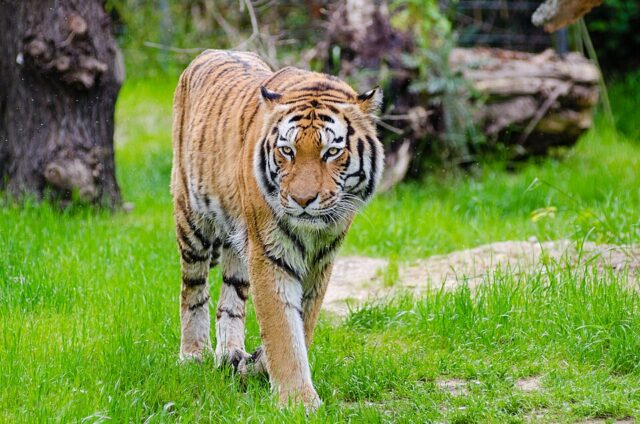
Chinese cosmology gives the White Tiger a directional and celestial role; Hindu iconography associates tiger or lion mounts with powerful goddesses including Durga; Korean, Chinese and Southeast Asian traditions develop further protective and ambivalent meanings. These traditions are related only in broad comparison, not because one universal ancient Tiger doctrine existed.
Tiger spirit animal: quick meaning
| Core meanings | Courage, ferocity, protection, independence, sensual power, authority |
|---|---|
| Shadow meanings | Aggression, isolation, domination, impulsiveness, uncontrolled appetite |
| Spirit animal lesson | Use intensity deliberately and know when strength needs restraint |
| Totem themes | Protection, warrior power, wilderness, prestige, cultural identity |
| Power animal themes | Courage, boundary defense, independence, focused force, confidence |
| Repeated sightings | Notice intensity, territory and whether power is being controlled or merely released |
What does a Tiger symbolize?
The Tiger symbolizes power because its physical dominance is immediately visible. Unlike the social Lion, the Tiger is largely solitary, so modern symbolism often emphasizes independence and self-contained strength.
Stripes create another layer. The animal is visually spectacular to humans yet difficult to see in its own habitat. Symbolically, this contradiction can represent hidden power: something does not need to be constantly visible to remain formidable.
Protection is culturally important in several Asian traditions. Tiger images have been used apotropaically to repel danger, while the animal can simultaneously embody threat. The protector is effective because it resembles what it keeps away.
Tiger Spirit Animal
As a modern spirit animal, Tiger often becomes meaningful when someone needs courage, decisive boundaries or confidence in solitary action. The lesson is not to isolate permanently, but to trust your capacity to act without universal approval.
People drawn to Tiger symbolism may identify with intensity, independence and strong desire. The shadow is all-or-nothing behavior: every challenge becomes a territorial fight, and vulnerability begins to feel incompatible with strength.
Tiger Totem Animal
In contemporary spiritual writing, Tiger as a totem is associated with protection, warrior power, wilderness and prestige. The word totem belongs to culturally specific Indigenous systems and should not be treated as a universal synonym for spirit animal. See Spirit Animals, Totems & Power Animals.
Tiger Power Animal
As a power-animal image, Tiger can support courage and focused action when fear has become paralyzing. Its spiritual value lies in controlled force, not in permanent aggression.
What does it mean when you see a Tiger?
Wild Tiger encounters are dangerous and should never be spiritualized in place of safety. For most readers, Tiger symbolism comes through dreams, ritual imagery, art and cultural symbols.
Repeated Tiger imagery may draw attention to independence, suppressed anger, sexuality or courage. Ask whether the animal appears as protector, hunter, captive or companion; the role changes the interpretation substantially.
White Tiger imagery is especially culturally loaded and should not be treated merely as a rare-color version of ordinary Tiger symbolism. In Chinese tradition, the White Tiger has specific cosmological associations.
Tiger meaning in love, relationships and dreams
In relationships, Tiger symbolism can represent attraction, passion and strong boundaries. The shadow is possessiveness or emotional intensity that overwhelms mutual choice. Independence remains healthy only when it does not make partnership impossible.
In dreams, a stalking Tiger can symbolize powerful emotion approaching awareness. Being chased may represent fear of anger, desire or authority. Riding or calmly walking beside a Tiger can represent confidence around one’s own intensity.
A caged Tiger may symbolize restricted power or anger held too tightly. A sleeping Tiger can represent dormant strength. A white Tiger may draw on Chinese, modern fantasy or personal color symbolism depending on the dreamer’s background.
The White Tiger, Durga and protective Tiger traditions
In Chinese cosmology, the White Tiger is one of the Four Symbols associated with the cardinal directions and celestial regions. It is linked with the West and appears in tomb art and cosmological systems alongside the Azure Dragon, Vermilion Bird and Black Tortoise.
South Asian religious imagery gives the Tiger another sacred context. Durga is frequently represented riding a lion or tiger, using the great cat as a visual expression of divine power brought under purposeful control. Regional traditions differ, so one mount should not be treated as the goddess’s only ancient form.
Across East and Southeast Asia, Tiger images can serve protective functions while folklore also portrays Tigers as dangerous, transformative or morally charged beings. The animal’s symbolism emerges from real coexistence with a feared predator, not merely from abstract admiration.
The practical lesson of the Tiger
- Power: What strength do you possess that does not need constant display?
- Territory: Which boundary genuinely protects life and which one only protects pride?
- Courage: What action would become possible if fear stopped dictating the pace?
- Restraint: Can you hold intensity without immediately acting on it?
- Shadow: Has independence turned into isolation or domination?
Tiger symbolism is most useful when ferocity and restraint remain together. The animal represents immense capacity, but capacity becomes meaningful only when directed. As a spirit-animal image, Tiger asks whether you can be powerful without making every situation a test of power.
Explore the broader Feline Symbolism cluster for related cats and meanings.
Books, sources and further reading
Templum Dianae’s Dark Goddesses material and guides to Hindu symbolism provide useful context for Durga and sacred feline imagery. Witchcraft for Beginners offers a wider framework for personal animal correspondences.
Continue through Hindu Symbols and Mammal Symbolism.
Historical sources: Chinese Four Symbols cosmology and White Tiger traditions; Hindu iconography of Durga; regional East and Southeast Asian Tiger folklore treated separately by culture.
Web References
- Symbol Codex, Tiger symbolism: https://symbolcodex.com/tiger-symbolism/
- World History Encyclopedia, Four Symbols traditions: https://www.worldhistory.org/article/1785/the-four-symbols-of-chinese-astronomy/
- Mythic India, Tiger symbolism in Indian tradition: https://mythicindia.com/tiger-symbolism-india/
- https://commons.wikimedia.org/wiki/File:Tiger_(27065384106).jpg