The White Tiger spirit animal is commonly associated with protection, courage, the West, autumn, metal and controlled martial power. Unlike a generic white-colored Tiger, the White Tiger has a specific place in Chinese cosmology as Baihu, one of the Four Symbols associated with the cardinal directions.
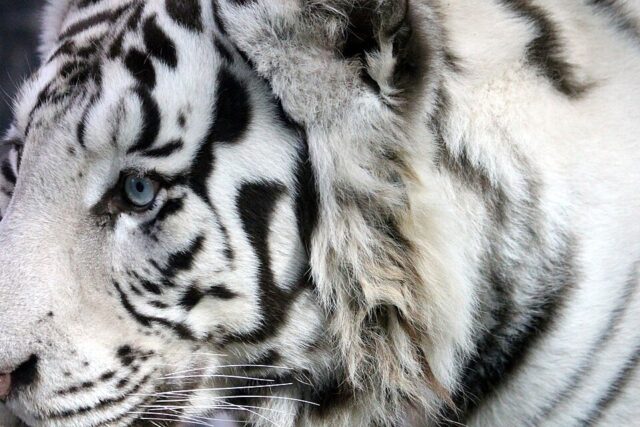
Modern spirituality often mixes this cosmological White Tiger with rare leucistic or white Bengal Tigers. The two should be distinguished. One is an ancient symbolic and celestial figure; the other is a biological color form selectively bred in modern captivity. The spiritual history comes primarily from Chinese religion, astronomy, tomb art and later East Asian traditions.
White Tiger spirit animal: quick meaning
| Core meanings | Protection, courage, martial power, autumn, the West, disciplined strength |
|---|---|
| Shadow meanings | Violence, rigidity, domination, aggression, pride |
| Spirit animal lesson | Use strength as a guardian force rather than as an excuse for conflict |
| Power animal themes | Protection, courage, boundaries, strategic force, discipline |
| Repeated sightings | Notice boundaries, conflict and whether force is serving protection |
What does the White Tiger symbolize?
The White Tiger symbolizes the West in the Chinese Four Symbols system, paired with the Azure Dragon of the East, Vermilion Bird of the South and Dark Warrior of the North. The system connects celestial observation, direction, season and cosmological order.
Autumn and the metal phase became associated with the White Tiger in later correlative cosmology. This gives the symbol a different character from generic Tiger imagery: it belongs to structured relationships between time, direction and cosmic balance.
Martial power is another major theme. The White Tiger can function as a protective and military symbol, representing force that guards order. The shadow is obvious: protection can become aggression when conflict becomes an identity.
White Tiger Spirit Animal
As a modern spirit animal, White Tiger often becomes meaningful when boundaries need to be enforced more clearly. Its lesson is not permanent aggression but readiness.
People drawn to White Tiger symbolism may value independence and strength. The shadow is treating softness as weakness or assuming every challenge requires confrontation.
White Tiger Totem Animal
The word totem is not the appropriate historical category for Baihu. In contemporary spiritual writing it may be used loosely for a long-term symbolic affinity, but historically the White Tiger belongs to Chinese celestial and protective symbolism rather than to a generic totem system.
White Tiger Power Animal
As a power-animal image, White Tiger can support courage, disciplined action and protective work. A historically grounded practice should acknowledge its Chinese cosmological roots rather than presenting it as a generic global symbol.
What does it mean when you see a White Tiger?
Actual white Tigers are extremely rare and mostly encountered in captivity. Seeing one should not be confused automatically with the ancient White Tiger of Chinese cosmology.
Repeated White Tiger imagery in art, dreams or ritual may be more relevant to the symbolic figure Baihu than to the biological animal. Ask whether the imagery includes direction, armor, gates, stars or other cosmological signs.
A White Tiger appearing as guardian can symbolize protection and boundary enforcement; one attacking may represent excessive force or fear of conflict.
White Tiger meaning in love, relationships and dreams
In relationships, White Tiger symbolism can represent strong boundaries and loyalty, but it can also warn about rigidity. Protection becomes unhealthy when it removes the other person’s freedom.
In dreams, a calm White Tiger may symbolize controlled strength. A charging one can represent conflict, anger or an authority that feels overwhelming.
A White Tiger at a doorway can be especially meaningful as a guardian image, while a caged White Tiger may symbolize suppressed power or a role that prevents authentic strength from functioning.
Baihu and the Four Symbols of Chinese cosmology
Smithsonian and University of Michigan collections preserve Han and later mirrors decorated with the Four Symbols. The White Tiger occupies the West, while the Azure Dragon, Vermilion Bird and Dark Warrior complete the cosmic orientation.
These images show that Baihu was not merely a folk “lucky Tiger.” It belonged to a larger cosmological map used in art, burial contexts and later religious systems. Direction, season and celestial order mattered.
Modern feng shui, martial arts and popular culture continue to use White Tiger imagery, sometimes transforming older meanings significantly. A responsible article distinguishes historical Baihu symbolism from contemporary spiritual practice and from zoological white Tigers.
The practical lesson of the White Tiger
- Protection: What boundary genuinely deserves forceful defense?
- Discipline: Can strength remain controlled until needed?
- Direction: What does the current phase of life require you to complete or release?
- Courage: Which conflict should be faced directly?
- Shadow: Has protection become aggression or rigidity?
White Tiger symbolism is strongest when its Chinese cosmological roots remain visible. It represents more than rarity or beauty. Its spiritual lesson is disciplined protective force placed inside a larger order.
Explore the broader Feline Symbolism cluster for related cats and meanings.
Books, sources and further reading
Templum Dianae’s Chinese Symbols and Feng Shui Symbols collections provide the most relevant context for Baihu, while Witchcraft for Beginners can be used separately for modern personal symbolism.
Continue through Chinese Symbols, Feng Shui Symbols and Animal Symbolism by Color.
Historical sources: Han-dynasty cosmological mirrors; Chinese Four Symbols traditions; later Daoist and correlative cosmology concerning Baihu.
Web References
- Smithsonian National Museum of Asian Art, mirror with the animals of the four directions: https://asia-archive.si.edu/object/F1937.30/
- University of Michigan Museum of Art, Four Spirits mirror: https://umma.umich.edu/objects/mirror-animal-cycle-type-ssu-ling-shih-er-hsiao-4-spirits-and-12-zodiacs-1974-1-180/
- Smithsonian American Art Museum, White Tiger in Chinese tradition: https://americanart.si.edu/events/family-zone/lunar-new-year
- https://commons.wikimedia.org/wiki/File:White_tiger_in_zoo.jpg