
The twelve astrological houses divide a birth chart into sectors associated with different areas of life. If a planet symbolizes a function and its zodiac sign describes the style of expression, the house identifies the topics through which that function may be experienced. The Ascendant and the selected house system determine the structure of the house wheel, so accurate birth information matters.
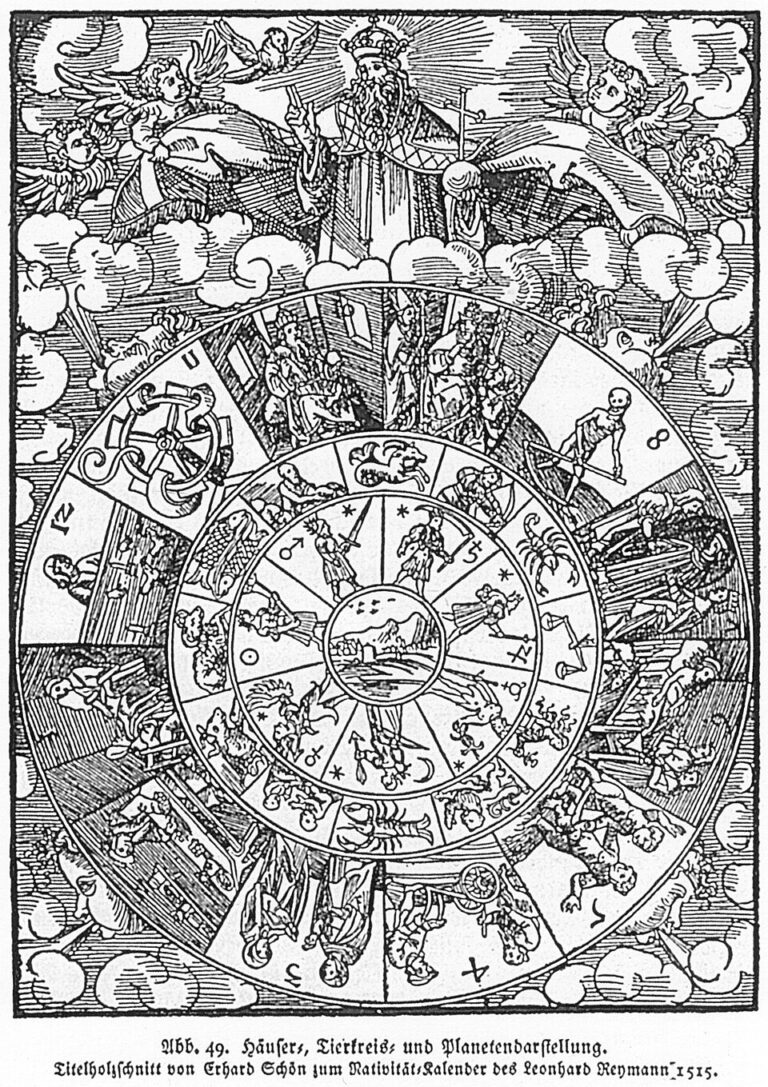
What the twelve houses mean
First house: embodiment, appearance and personal approach. Second: resources, possessions and material priorities. Third: speech, learning, siblings and nearby environments. Fourth: home, roots and private foundations. Fifth: creativity, play, romance and children. Sixth: daily labor, routines, service and care.
Seventh house: partnership and one-to-one agreements. Eighth: shared resources, obligations and vulnerability. Ninth: travel, advanced study, belief and perspective. Tenth: career, reputation and public responsibility. Eleventh: groups, alliances and aspirations. Twelfth: withdrawal, retreat, private processes and hidden difficulties. Interpretations differ by historical school and should be understood within that context.
Angles and house rulers
The Ascendant marks the eastern horizon and begins the first house in many systems. The Descendant lies opposite it; the Midheaven and Imum Coeli are additional principal angles. Angular houses—first, fourth, seventh and tenth—often receive particular emphasis. An empty house remains interpretable through its sign and planetary ruler; it is not evidence that the associated life topic is missing.
Planets in the houses
Venus in the seventh house emphasizes a different symbolic field from Venus in the second, even when Venus is in the same sign. Begin with the planet, then the house topics, sign placement, ruler and aspects. The twelfth house, for example, should not be reduced to fear or secrecy without considering its full traditional range, the dignity of occupying planets and chart context.
Why house systems differ
Whole Sign, Equal House and Placidus are three widely discussed approaches. Whole Sign assigns each whole sign to one numbered house; Equal House spaces cusps 30 degrees apart from the Ascendant; Placidus uses a time-based quadrant division. The same planet may change houses when a different system is used. The choice must be stated and applied consistently.
Explore guides in this section
The distinction between a house and the planet occupying it is fundamental. Study the twelve house topics first, then explore placements inside those houses and the computational differences among house systems.
- Planets in Houses — Planetary symbolism in the twelve houses.
- House Systems — Whole Sign, Equal House and quadrant systems.
Return to the main Astrology guide.
https://commons.wikimedia.org/wiki/File:Leonhard-reymann-horoscope-erhard-schoen-1515-strauss.jpg
