A report published on November 4 describes an unusual account from members of the Salford Astronomical Society in England. According to the report, eight observers said they saw two formations of lights above their observatory on October 7. The sighting was reported to the National UFO Reporting Center, a public organization that collects witness accounts. The existence of a filed report is a documented fact; the nature of the lights remains unverified.
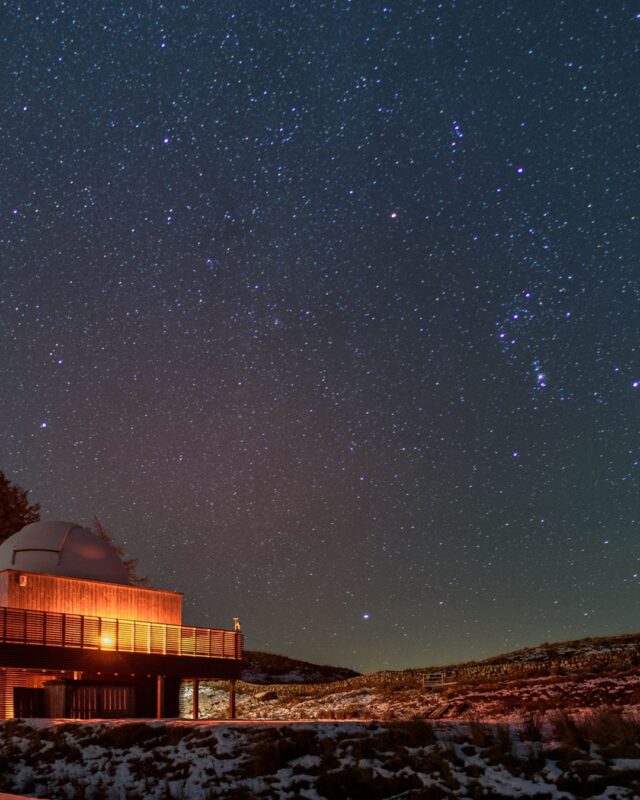
The witnesses described an initial group of orange lights in a chevron arrangement and a later formation of white points resembling a triangle. They reportedly regarded the lights as unusual because of their apparent relative positions and movement. Their judgments about the absence of sound or the unlikelihood of drones are parts of the testimony, not conclusions reached by an independent investigation with complete instrument data.
Reports from people familiar with the night sky are worth examining carefully, yet experience alone cannot identify an unfamiliar object. Estimates of height, size and speed based on lights at unknown distances are particularly uncertain. Without synchronized photographs, precise bearings, flight records and orbital checks, researchers cannot confidently separate aircraft, drones, satellites or optical effects from phenomena that deserve further investigation.
Terms such as unidentified aerial phenomenon and UFO describe an unresolved observation rather than a proven extraterrestrial vehicle. A formation of points does not demonstrate that one solid craft connected them. Conversely, an absence of immediate explanation does not make the witnesses’ account meaningless. It identifies the questions that investigators would need to test.
The case is distinct from the previously released Pentagon records on triangular objects discussed in our earlier report on official UAP files. The Salford account is a civilian report about a different location and date. Until an independent evidence review is available, a careful description of the testimony is more accurate than either an extraterrestrial conclusion or a confident dismissal.
References