Click and download your
FREE Guided Meditation MP3!
Attract and Manifest
Love, Power, and Abundance
through Templum Dianae Guided Meditation!
Every week, readers write to us with the same feeling: something is pulling them toward the darker faces of the Divine Feminine — toward the goddesses of death, rage, magic, and shadow — but they don’t know where to start, or worse, they feel guilty for being drawn there at all.
After years of researching, writing, and publishing esoteric works on ancient spirituality at Templum Dianae, I’ve seen how much confusion surrounds dark goddesses names and their meanings. Most sources either demonize these figures or flatten them into aesthetic trends. Neither does justice to the raw, transformative power these archetypes carry.
In this complete guide, you will find:
Here’s everything you need to know.
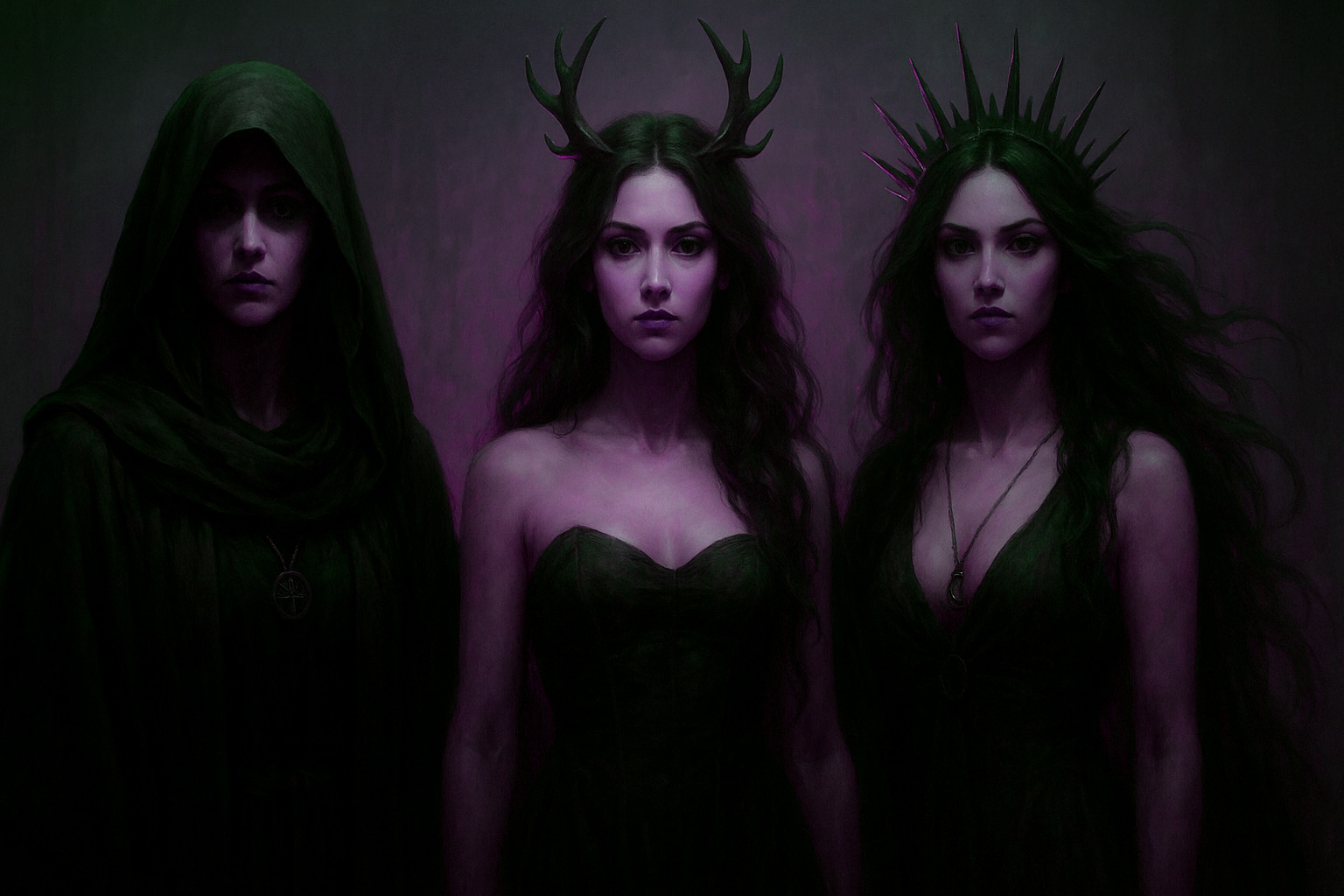
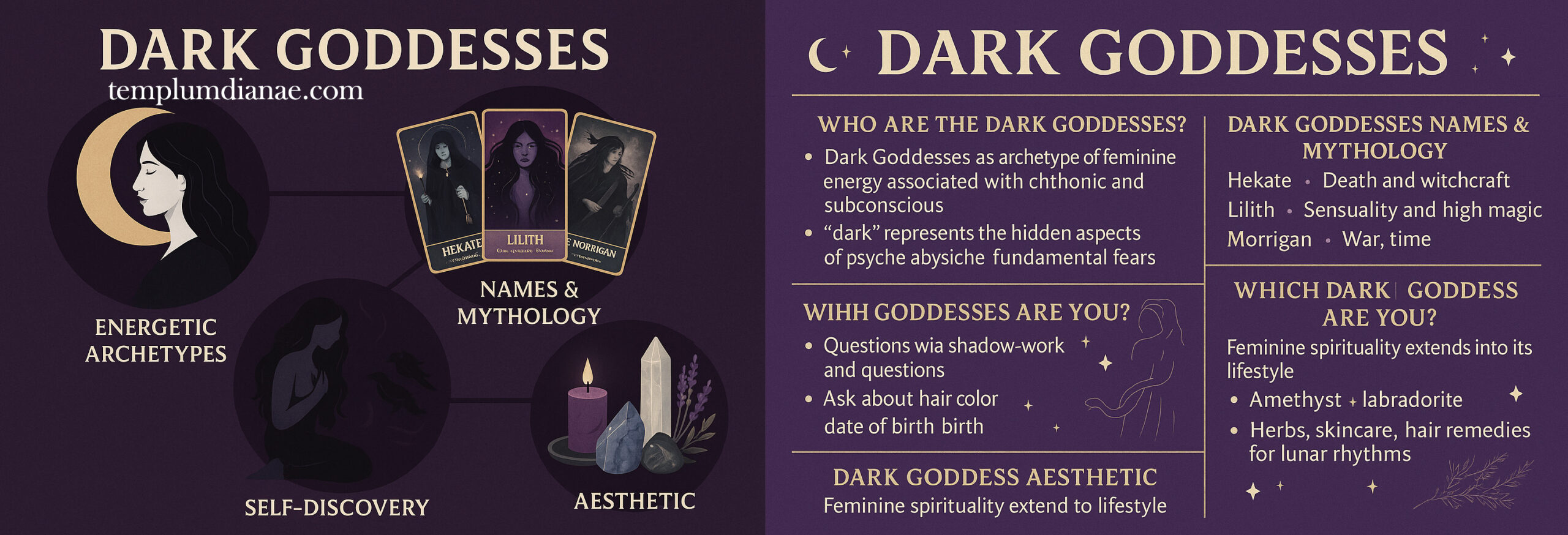
in Templum Dianae Dark Goddesses are archetypes of the Divine Feminine that embody shadow, transformation, and sovereignty — the parts of yourself you’ve been taught to fear, exile, or silence.
One of the most common things I hear from readers who come to Templum Dianae for the first time is some version of this: “I’m drawn to these figures, but I don’t know if I’m supposed to be. Are they dangerous? Am I doing something wrong?”
The confusion is understandable. Most of what circulates about dark goddesses online either sensationalizes them or flattens them into aesthetic. What gets lost in both cases is the actual work — and why it matters.
So let’s be clear from the start: when we talk about Dark Goddesses, we are not talking about evil beings or cruel spirits waiting to punish you. In feminine spirituality, dark does not mean bad, wrong, or harmful. Dark means hidden — the parts of you that live below the surface of your polite, acceptable personality.
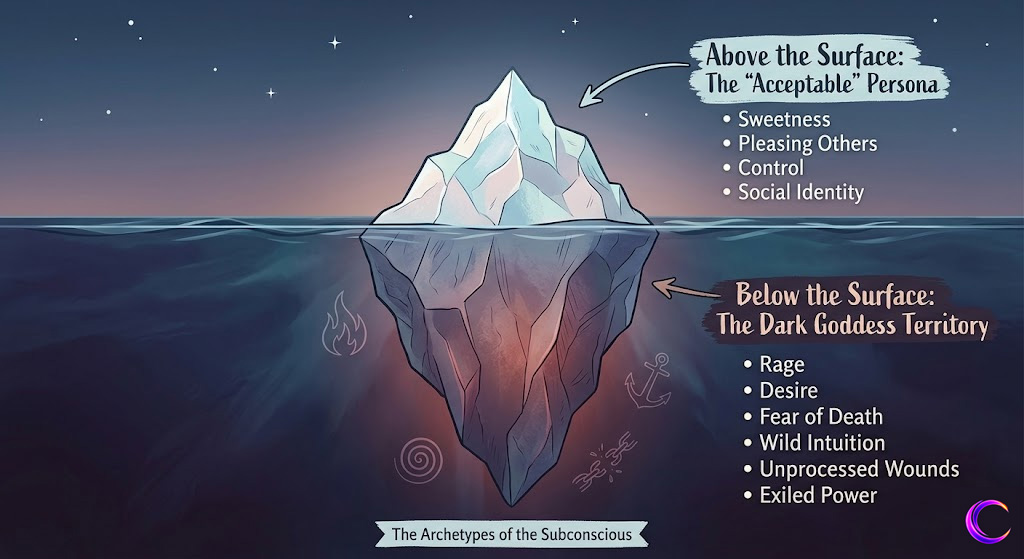
Dark goddesses are archetypes that move through the spaces most of us are trained to avoid: the fear of death, the reality of trauma, the shame around our bodies and desires, the rage we swallow, the grief we bury, the intuition we silence to remain “good.” They live where your night fears, your obsessions, your forbidden longings, and your deepest wounds are stored — in what depth psychology calls the shadow.
In practice, this shows up in very recognizable ways. The pattern that keeps repeating in your relationships. The feeling that you betray yourself to maintain peace. The quiet voice that knows you’re meant for more, but stays silent out of guilt or anxiety. Dark goddess energy doesn’t look away from these places — it turns directly toward them.
This is why, in the work I do at Templum Dianae, the dark feminine is so closely linked to sovereignty and choice. Working with these archetypes is not about becoming more mysterious or more pleasing. It’s about learning to choose for yourself — often for the first time. You begin to see where your life has been shaped by other people’s expectations: partners, family, religion, culture. You start to notice how much of who you are was decided by someone else.
(In my experience guiding readers through this work, the most disorienting moment isn’t encountering the darkness — it’s realizing how long you’ve been living at a distance from yourself.)
The shift the dark feminine asks for is simple, but not easy: from “What will they think if I…?” to “What do I know is right for me?” It doesn’t ask you to become someone else. It asks you to stop exiling the parts of yourself you’ve been taught are too much — your anger, your erotic force, your grief, your ambition, your spiritual hunger — and bring them back under your own authority.
So who are the Dark Goddesses? They are the faces of the Divine Feminine that stand at the threshold of your shadow. They are not here to make your life comfortable. They are here to make your life accurate — by walking you through the darkness you’ve been taught to fear, until you recognize it for what it always was: your own power, waiting.
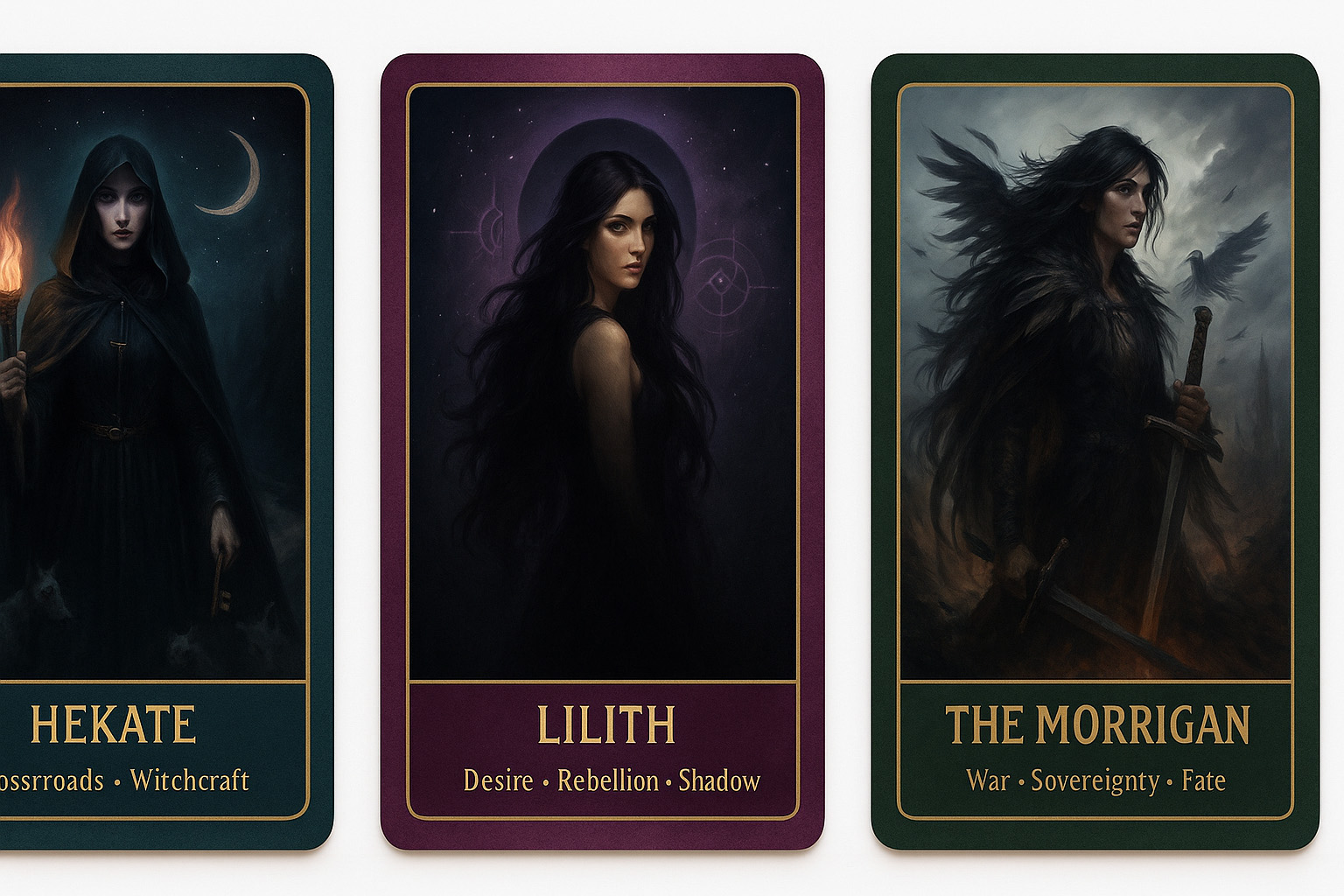
Every Dark Goddess is more than a name in an old myth. She is an archetype – a living pattern inside your psyche – and each one is linked to specific instincts, wounds, desires and spiritual practices. When you feel drawn to one Dark Goddess more than another, it usually means that a very precise part of your soul is asking to be seen and worked with.
Below you’ll find three of the most powerful and widely recognized dark feminine figures. We’ll go deeper into lists later; for now, think of these three as doorways into different aspects of your own darkness and power.
Death, Witchcraft and the Crossroads
Hekate originates from the ancient Greek world, where she was revered as a liminal goddess: the guardian of thresholds, crossroads, and doors between worlds. In mythology, she moves between Earth, sea, and the underworld, carrying torches and keys, accompanied by hounds and ghosts. She is not a pretty, harmless “moon goddess” – she is the one who walks beside you when the path splits and you know that one choice must die so another can live.
Psychologically, Hekate embodies the archetype of the witch at the crossroads: the part of you that knows how to navigate endings, grief, changes in direction, and the invisible forces that shape your life. She is tied to our fear of death – not only physical death, but the death of identities, relationships, and roles we’ve outgrown – and to the secret excitement that comes when we finally admit we are ready for something different.
Spiritually, Hekate is associated with witchcraft, necromancy, and liminal magic. Modern practitioners may work with her through:
When Hekate calls you, you often feel pushed to make a decision you’ve avoided for years. She doesn’t do comfort. She does clarity.
follow this link if you want learn more about hekate.
High Magic, Kabbalah and Forbidden Sensuality
Lilith has roots in ancient Mesopotamian and Jewish traditions and later appears in mystical and Kabbalistic texts. Over time, she has been described as a night spirit, a demon, the first wife of Adam who refused to submit, a seductress, and a teacher of forbidden wisdom. Behind the layers of demonization lies a clear archetype: the woman who will not kneel.
On a psychic level, Lilith embodies the shadow of desire, rage, and autonomy. She lives where sexuality, shame, and power are tangled together. She touches the memories of being punished for wanting too much, for speaking too loudly, for refusing to play “nice”. Lilith is not here to make you more palatable. She is here to reconnect you with the raw current of your erotic, magical, and creative force.
In many esoteric traditions, Lilith is associated with high magic and Kabbalah, particularly in the practice of pathworking on the Tree of Life, advanced ritual work, and profound exploration of the subconscious. Spiritually, she is often approached through:
If you feel drawn to Lilith, it usually means your soul is tired of apologizing for its intensity. She invites you to own your hunger – in bed, in magic, in life – without handing the steering wheel of your choices to guilt or other people’s morality.
Celtic Sovereignty, War and the Flow of Time
The Morrigan comes from the Irish Celtic tradition, where she appears as a complex, often triple goddess associated with war, fate, sovereignty, and prophecy. In myth, she walks battlefields as a crow, whispers to heroes, blesses or withdraws victory, and is deeply connected with the land itself. She is not just a war goddess; she is the voice of the land demanding that those who rule be worthy.
Inside your psyche, the Morrigan is the archetype of the inner warrior-queen: the part of you that knows when to fight, when to withdraw, and when to burn the old to protect what truly matters. She is tied to your relationship with conflict, courage, and time – the awareness that your life is finite, that every “later” has a cost, that refusing to choose is also a choice.
Spiritually, the Morrigan is often approached through:
When the Morrigan steps into your life, you may feel suddenly unable to tolerate half-measures: half-relationships, half-truths, half-commitments. She pushes you to fight for your ideals, not in a romanticised way, but in the gritty, everyday discipline of choosing what aligns with your soul and letting the rest fall away.
Exploring the list of dark goddesses is a journey into the shadow self. From the dark feminine deities of ancient Greece to the fierce underworld goddesses of the Hindu tradition, each name carries a vibration of power and transformation
| Pantheon | Goddess Name | Domain & Power | Key Symbolism |
|---|---|---|---|
| Greek | Hekate | Crossroads, Witchcraft, Necromancy | Torches, Keys, Daggers, Hounds |
| Greek | Persephone | Queen of the Underworld, Rebirth | Pomegranate, Iron Crown, Narcissus |
| Greek | Nyx | Primordial Night, Creation, Chaos | Stars, Black Wings, Clouds of Mist |
| Mesopotamian | Lilith | Independence, Shadow Self, Primal Magic | Owls, Serpents, The Mirror |
| Mesopotamian | Ereshkigal | Mistress of the Great Below, Death | The Seven Gates, Lapiz Lazuli |
| Celtic | The Morrigan | Sovereignty, Fate, War, Transformation | Crows, Ravens, Spears, Red Hair |
| Hindu | Kali | Time, Destruction of Ego, Liberation | Severed Head, Scimitar, Tongue out |
| Norse | Hel | Death, Afterlife, Inner Silence | Half-Dead/Half-Alive body, Garmr |
| Egyptian | Sekhmet | Divine Rage, Healing, Destruction | Lioness Head, Solar Disk, Red Linen |
| Egyptian | Nephthys | Mourning, Darkness, The Unseen | Basket on Head, Wings of Protection |
| Aztec | Itzpapalotl | Purification, Sacrifice, Obsidian Spirit | Obsidian Butterfly, Claws |
| Goddess Name | Key Symbols | Symbol Icon | Esoteric Meaning |
|---|---|---|---|
| Hekate | Torches, Keys, Daggers | Guiding light through transitions and the gateway to hidden knowledge. | |
| Persephone | Pomegranate, Iron Crown | The balance of life and death; the necessity of the inner descent. | |
| Nyx | Black Wings, Starry Veil | The primordial void and the peace found in absolute darkness. | |
| Lilith | Owls, Serpents, Mirror | Reclaiming wild independence and the raw current of erotic magic. | |
| Ereshkigal | Seven Gates, Lapis Lazuli | Radical honesty and the stripping of the ego in the Great Below. | |
| The Morrigan | Crows, Ravens, Spears | The warrior queen’s sovereignty and the courage to face fate. | |
| Kali | Scimitar, Severed Head | Destruction of the ego and the liberation from societal illusions. | |
| Hel | Half-Dead Body, Garmr | The integration of death and the power found in inner stillness. | |
| Sekhmet | Lioness Head, Solar Disk | Purifying rage used as a tool for healing and protection. | |
| Nephthys | Basket, Wings of Protection | Comfort in mourning and the guardian of the unseen realm. | |
| Itzpapalotl | Obsidian Butterfly, Claws | Sacrifice of the old self and the clarity of the obsidian mirror. |
On your life path, you don’t just “like” certain Dark Goddesses at random. Very often, you are born under the influence of one central archetype, and then, as you grow, other dark feminine currents begin to weave into your story. You might feel Hekate’s presence when you face a major ending, Lilith’s when you start rebelling against old rules, the Morrigan’s when you finally decide to fight for your sovereignty.
Knowing “which Dark Goddess you are” is not about putting a label on yourself forever. It’s a way to understand which dark feminine energy is most active in you right now, and which deity is calling you into deeper shadow work and transformation.
To discover this, you need to make a small shadow work journey with the Dark Goddesses and look honestly at two levels:
if you want to know more about dark Goddesses, you can start to learn all about on this handbook dedicated to all goddesses
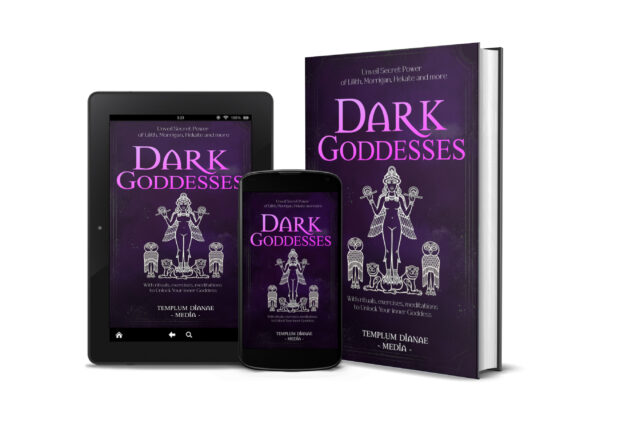
avaiable on 2 formats:
The moment you were born is not neutral. In spiritual traditions, it is viewed as a form of cosmic motherhood: the sky, the earth, the light, and the dark around you form a first “welcome” from the invisible world. Some Dark Goddesses are strongly linked to the night, the moon, blood, and thresholds, while others resonate more with war, storms, or forbidden desire.
Start by asking yourself:
These aren’t just aesthetic details. In a dark feminine perspective, they can echo a particular spiritual lineage at birth:
You don’t have to “fit” a perfect pattern. You are looking for resonance – the feeling that some of these elements form a symbolic story about how you came into this world.
Then, move from your birth story to your current reality. Here, the question is not “Who have I always been?” but “What is my soul asking for in this exact phase of my life?”
Ask yourself, with radical honesty:
These questions show you which Dark Goddess energy you should contact – or which one is already knocking at the door of your life by amplifying your discomfort.
Sometimes the goddess that imprinted your birth and the goddess you need now are the same. Sometimes they are different. That is normal. Your path with Dark Goddesses is not static; it’s a series of initiations.
Because if you’re already asking these questions, you’re in the middle of a Dark Goddess initiation whether you realise it or not – and the worst thing you can do is walk it blind; that’s exactly why the Dark Goddesses book by Templum Dianae exists, an international bestseller that gives you a complete map of who these goddesses are, how they move through your psyche, and how to work with them through rituals and meditations in a structured, safe and truly transformative way. you can find the dark goddesses book at this link.
Use this article as your map, and those books as your initiations.
The Dark Goddess that is already walking beside you will make herself known the moment you decide to look into the shadow and claim that it is yours.
None of these paths is “better” or “lighter” than the others. They are different doors into dark feminine work. You may start with Hekate and later be pulled toward Lilith; you may live a Morrigan decade and then feel Hekate calling you at the end of a long cycle.
What matters is that you stop letting others choose for you – your partners, your family, your culture, your algorithms – and begin to choose consciously which dark feminine current you want to walk with.
Use your answers as a mirror and feel which of these three currents is closest to your bones right now:
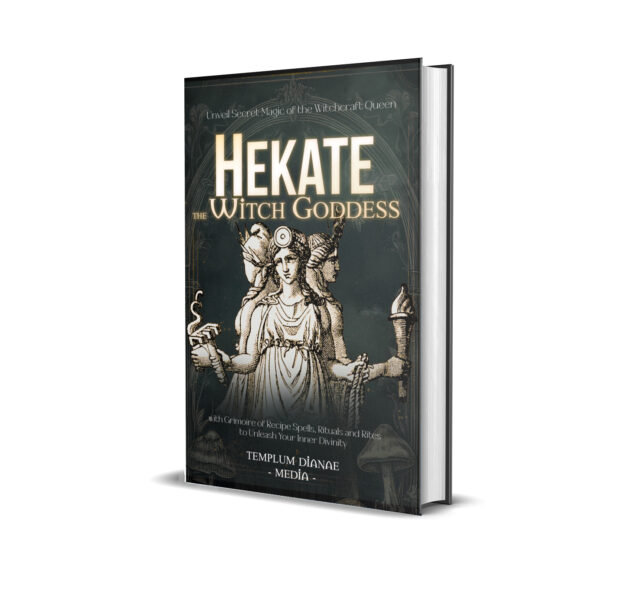
Hekate’s energy asks: “Will you finally close the door that is already dead so that the new path can open?”
discover more about hekate with his dedicate book on dark goddesses at this link.
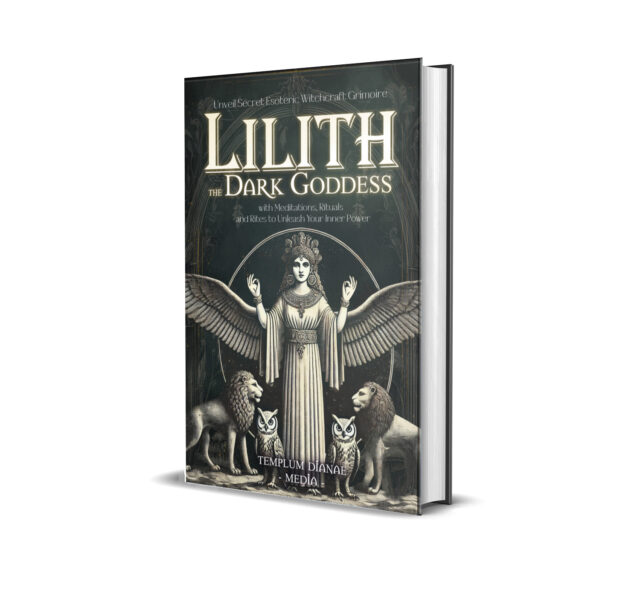
Lilith’s energy asks: “Will you stop shrinking to be loved, and let your forbidden fire speak?”
discover more about lilith with his dedicate book on dark goddesses at this link.
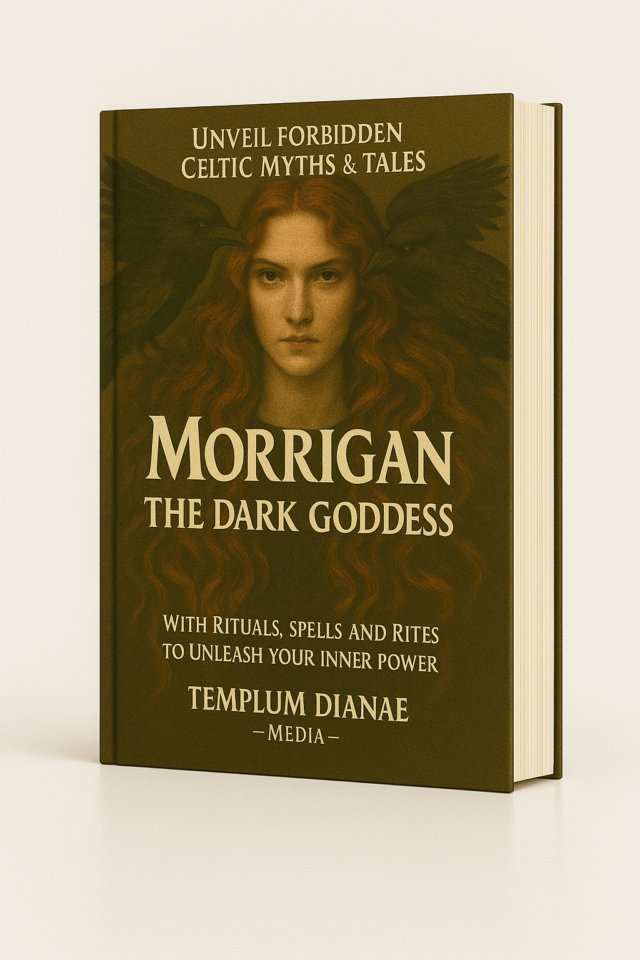
The Morrigan’s energy asks: “What are you willing to defend with your whole heart – and what must fall?”
discover more about Morrigan with his dedicate book on dark goddesses at this link.
Dark goddess spirituality is not just something you “think” or “feel” inside.
Authentic feminine spirituality never stays purely internal – it leaks into how you dress, how you decorate your home, how you care for your body, how you move through a room. The way you live becomes an altar.
When you start working with Dark Goddesses, your aesthetic stops being random; it becomes a way to anchor their energy in matter: in crystal grids on your shelves, in the jewelry on your skin, in the herbs you use on your hair and face under the light of the Moon.
You don’t need a hundred stones. A few carefully chosen allies are enough to hold a dark feminine field around you:
Scatter these crystals intentionally: one on your bedside table, one on your altar, one in your bag, one as jewelry. The point is not to collect, but to consecrate your space so that every corner whispers: “A Dark Goddess lives here.”
The dark goddess aesthetic is not just about black clothes and dramatic eyeliner. It’s also about treating your skin and hair with reverence, working with the Moon instead of fighting against your body in a random, disconnected routine.
You can start simple, using herbs and natural remedies timed with the lunar phases:
The goal is not perfection. It is a relationship: with your body, with the Moon, with the Dark Goddesses who live in the spaces between your rituals. Every time you choose a crystal consciously, prepare an herbal rinse, or time your beauty care with the lunar cycle, you’re telling your nervous system:
“My spirituality is not just in my mind. It lives in my home, in my skin, in my hair, in the way I move through the world.”
Dark goddesses are archetypes of the Divine Feminine linked to the hidden, uncomfortable and powerful layers of the psyche: shadow, death and rebirth, taboo desire, rage, grief, magic and transformation.
“Dark” does not mean evil or negative – it means unseen: everything you don’t fully acknowledge about yourself, from buried wounds to forbidden strengths.
There is no single official list, but many traditions recognise dark feminine figures such as Hekate (Greek crossroads and witchcraft), Lilith (rebellion, desire and high magic), the Morrigan (Celtic war and sovereignty), Kali (Hindu destruction and liberation), Hel (Norse underworld), Ereshkigal (Mesopotamian underworld) and others.
Each one expresses a different way the dark feminine works: through endings, desire, battle, madness, prophecy, deep magic, or underworld initiation.
The title of Goddess of Darkness varies by culture. In Greece, Nyx is the primordial embodiment of night. In Hindu tradition, Kali represents the transformative power of darkness and time. Explore our list above for more goddess of darkness names and their meanings.
While many cultures have deities associated with the night, Nyx (Greek) is often considered the ultimate Goddess of Darkness as she represents the primordial night from which everything was born. Other major figures include Hekate, the goddess of the dark moon and witchcraft, and Kali, the Hindu goddess who embodies the destructive and transformative power of darkness.
If you are looking for darkness goddess names to guide your shadow work, the most resonant are often Lilith (for reclaiming suppressed power and independence), The Morrigan (for sovereignty and facing inner battles), and Persephone (for navigating the subconscious and the “underworld” of the soul). Each name represents a different facet of the dark feminine energy.
In spiritual practices, the term Dark Goddess often refers to archetypes that deal with the “shadow” aspects of the human experience (grief, rage, transformation), while a Goddess of Darkness specifically personifies the literal night, the void, or the astronomical darkness. However, in modern search and mythology, both terms are used interchangeably to describe deities like Ereshkigal, Hel, and Nephthys.
Hekate is the most prominent goddess of dark feminine power associated with the lunar cycle, specifically the New Moon or “Dark Moon.” Unlike Artemis or Selene, who represent the light of the moon, Hekate governs the darkness between cycles, symbolizing the magic and wisdom found in the unseen and the silent transitions of life.
There is no fixed number. Every culture has goddesses who guard the thresholds of death, the underworld, blood, war, sexuality, storms and taboo wisdom. From a spiritual-psychological perspective, you can say there are dozens, even hundreds of dark goddesses across world myth – but they all express a few recurring archetypal currents: death–rebirth, shadow, sovereignty, forbidden desire and deep magic.
Dark goddess energy is the current of the Divine Feminine that:
It feels intense, sometimes disruptive, but its purpose is liberation: to stop you living as a good, numb version of yourself and push you into a life that is actually aligned with your soul.
There is no one “correct” answer. The right Dark Goddess for you is the one whose themes mirror your current life:
To choose, look honestly at:
Then notice which goddess’s myths, symbols and energy hit you in the gut instead of just “sounding interesting”. That’s usually your doorway. If you want a structured way to explore all these archetypes before committing to one, the Dark Goddesses book by Templum Dianae is designed exactly for that: to give you a clear map of each goddess and her shadow work path, so you’re not walking this initiation blind.
Working with Dark Goddesses is not a game of aesthetics or a rebellion for its own sake. It is a radical refusal to live only inside the myths society has written for you – the myths of obedience, nice-girl compliance, spiritual bypassing and emotional control. When you step into the temple of the dark feminine, you step outside of those scripts and into a deeper, older story: the story of your own underworld.
Through Hekate, you’ve seen how endings, death and crossroads are not punishments but gateways. Through Lilith, you’ve touched the fire of desire, high magic and forbidden autonomy that lives under your shame. Through the Morrigan, you’ve felt the call to war for your own sovereignty, to stand where time is running out and choose what you will defend with your whole life. Each Dark Goddess is a realm of your inner landscape – a kingdom of fear, memory, instinct and power that society has tried to lock away.
This is what dark goddess work truly is: a deep, ongoing education in your own energy. It is learning how your shadow moves, how your body speaks, how your soul resists control. It is remembering that your spirituality is not meant to domesticate you, but to return you to yourself – wild, lucid, unapologetically aligned. When you dare to walk with the Dark Goddesses, you are not worshipping something outside of you. You are finally turning toward the parts of you that have always lived in the dark, and choosing to bring them home.
bibliographic references:
web references: