The Hierophant Rider-Waite Card Description and Symbolism
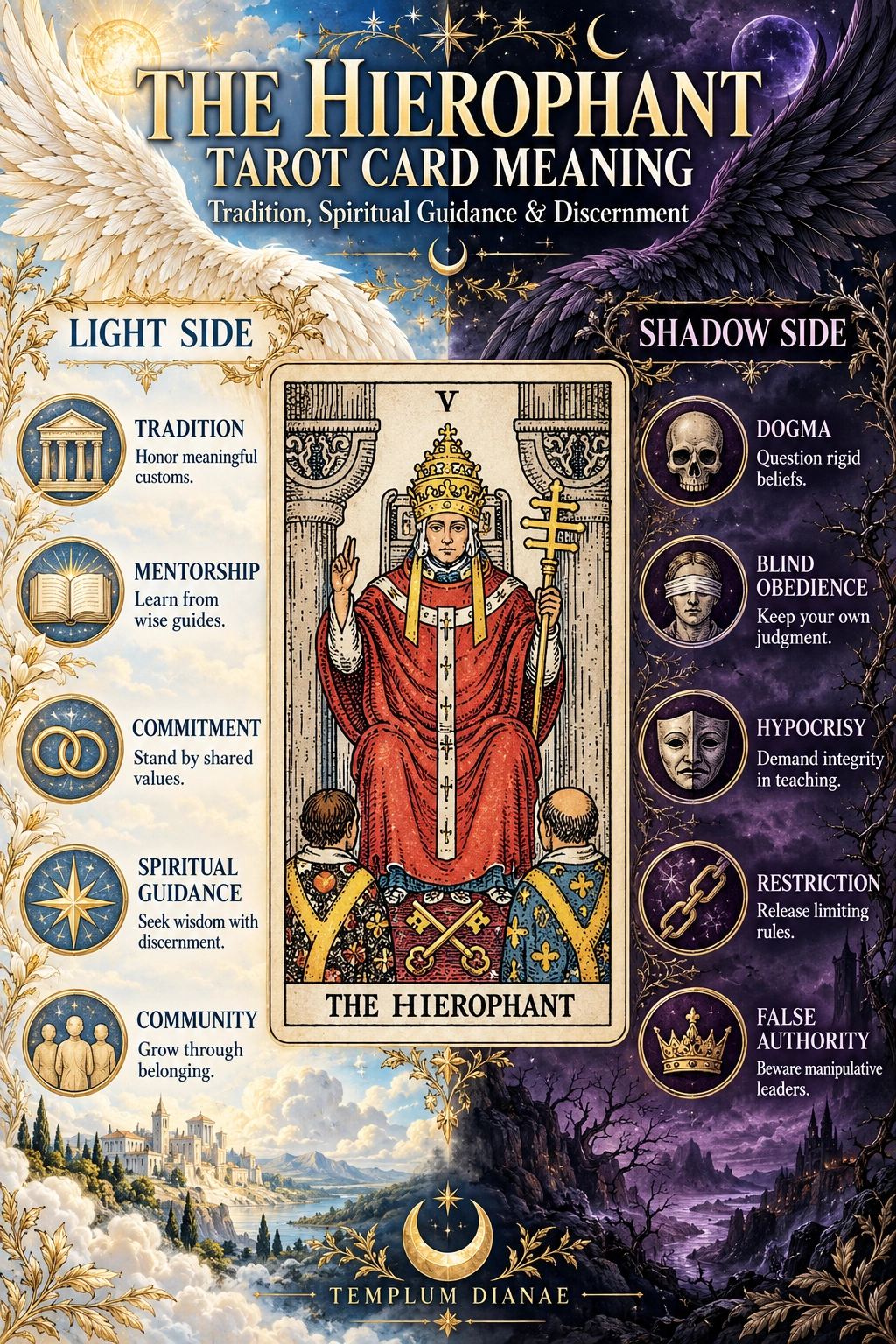
The Hierophant is often shown as a religious or spiritual leader seated between pillars, wearing ceremonial robes and a crown or headdress that signals authority. Two acolytes kneel before him, representing students, followers, or the part of you that seeks instruction and approval. His raised hand resembles a blessing or formal teaching gesture, while the symbols on his garments suggest sacred order—structure that has been passed down through generations. Near his feet you may see two keys, a powerful detail: keys imply access, initiation, and hidden knowledge, but also gates that can be locked. The atmosphere of the card feels formal, traditional, and institutional. Unlike The High Priestess, who guards inner mystery, The Hierophant represents shared systems—religion, culture, moral codes, schools, and mentorship. When this card appears, it often highlights your relationship with rules: the ones that support you, and the ones that quietly control you.
Understanding The Hierophant Symbolism
In the Rider-Waite image, the keys, pillars, ceremonial gesture and two acolytes emphasize initiation, authority, teaching and the transmission of tradition.
The seated teacher, paired pillars and two kneeling figures present the transfer of teachings within a structured setting. The crossed keys evoke access to knowledge and authority. In a reading, ask whether access is being responsibly shared or controlled by gatekeeping.
Look closely at the Rider-Waite illustration: a robed spiritual teacher sits between pillars, holding a triple cross and raising a hand in blessing; two acolytes kneel below and a pair of keys lies near the base. These concrete details shape the card’s concern with teaching, shared commitments and the choice to learn from a tradition without surrendering judgment without prescribing one certain event.
The Hierophant Rider-Waite Upright Meaning
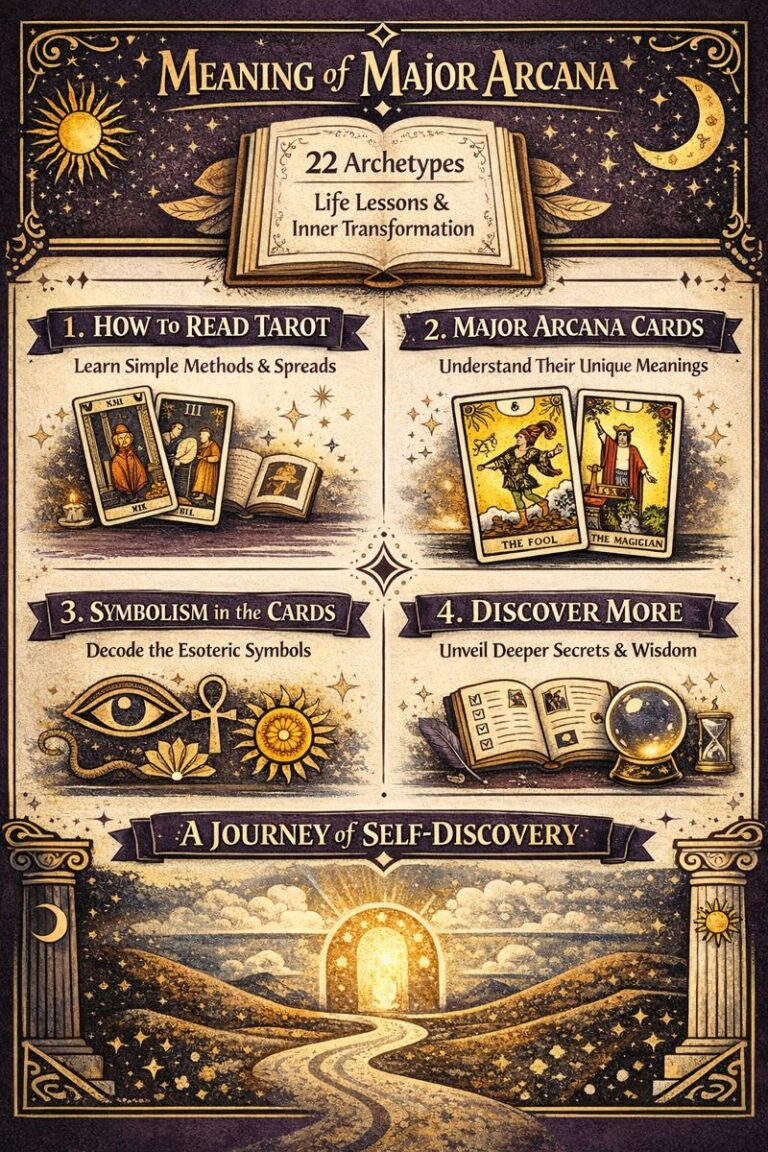
The Hierophant is V, the number of learning through challenge, change, and initiation into a larger framework. After the stability of IV, five tests your beliefs: it asks you to grow beyond instinct and build meaning through values, vows, and conscious choices. In many esoteric systems, The Hierophant is associated with the Hebrew letter Vav (ו), often described as a “hook” or “nail,” symbolizing connection—linking heaven and earth, spirit and daily life, teaching and practice. Upright, The Hierophant can indicate a mentor, counselor, teacher, or a traditional path that brings safety and clarity. It may point to institutions, certifications, marriage, community, or a commitment that stabilizes your life. It’s also a card of spiritual discipline: prayer, ritual, routine, and learning from established wisdom rather than improvising. But the deeper message is discernment. Upright, The Hierophant asks: “What do you stand for?” and “Which rules actually protect your future?” Used well, this card helps you create a moral spine—boundaries, standards, and a spiritual framework that keeps you steady when emotions fluctuate. If you want to explore the meanings of other Major Arcana, visit Templum Dianae meaning of major arcana.
Upright in Love and Relationships
Keywords: commitment, shared values, stability
In love, The Hierophant upright often signals commitment and serious intentions. It can indicate a relationship moving toward exclusivity, engagement, marriage, or a shared “we.” This is love built on alignment—values, family vision, and mutual respect—not just chemistry. It can also suggest seeking guidance or learning healthier relationship patterns. The message: choose stability and standards over drama.
Upright in Career and Work
Keywords: mentorship, credibility, long-term growth
In career and money, The Hierophant upright favors education, certifications, structured learning, and mentors who help you shortcut mistakes. It can point to working within institutions or building authority through a proven path. Financially, it rewards consistency: steady plans, conservative decisions, and professional integrity. This is not “fast money”—it’s durable progress you can defend.
Upright in Money and Finances
For money, The Hierophant asks where reliable expertise or a documented procedure is needed. It can favor examining a contract, using an established budgeting method or seeking qualified guidance. Credentials deserve attention, but they are not a substitute for understanding the recommendation.
Upright in Spirituality
This is a natural card for formal learning, ritual literacy and seeking teachers who can explain why a practice is performed. A tradition becomes useful through comprehension and responsible participation, not through unquestioned imitation.
The Hierophant Rider-Waite Reversed Meaning
Reversed, The Hierophant warns about rigid beliefs, dogma, or submitting to an authority that doesn’t deserve your trust. It can show hypocrisy, controlling communities, manipulative teachers, or rules that are used to shame you instead of support you. Sometimes the reversal is internal: you resist structure so intensely that you sabotage your own growth. The lesson is not blind rebellion or blind obedience—it’s sovereignty. Keep what works. Question what doesn’t. Build your own framework with clear principles, not borrowed fear.
Reversed in Love and Relationships
Keywords: misalignment, rebellion, pressure
In love, reversed Hierophant can indicate value clashes, cultural or family pressure, or a relationship that feels controlled by “shoulds.” It may also point to secrecy, unconventional dynamics, or refusing commitment out of fear. The invitation is honesty: are you living your relationship to please others, or to honor your truth? Real love doesn’t require you to betray yourself.
Reversed in Career and Work
Keywords: toxic authority, stagnation, breaking rules
For career and money, reversed Hierophant can signal toxic workplaces, bureaucratic blocks, or leaders who enforce rules to keep you small. It may also reflect taking shortcuts, rejecting training, or distrusting every system. The correction is strategic: keep your independence, but don’t throw away structure that would make you stronger. Learn the rules—then decide which ones to outgrow.
Reversed in Money and Finances
Reversed, the card warns against trusting an adviser only because they occupy a prestigious position, or rejecting every conventional safeguard on principle. Compare the advice against actual terms and independent evidence.
Reversed in Spirituality
Rigid dogma may crowd out understanding, while purely performative rebellion may discard useful sources. Ask which teachings withstand sincere questioning and which require obedience without explanation.
The Hierophant Rider-Waite Tarot Interpretations in Readings
The Hierophant Yes or No
Upright: Usually Yes when commitment, convention or established guidance supports the situation.
Reversed: The answer may be No if rules, expectations or external authority are limiting what is authentic.
The Hierophant can favor a yes when training, tested methods or a formal agreement will help. For education or a professional application, verify the standards and the credibility of the institution. Reversed, the question may be whether a rule serves learning or merely discourages independent judgment.
The Hierophant as Feelings
As feelings, this card suggests respect, seriousness, commitment and a desire to define the relationship through shared values.
The Hierophant as a Person
As a person, The Hierophant can describe someone traditional, knowledgeable, principled and mentor-like; in shadow, rigid, dogmatic or overly dependent on convention.
A Hierophant figure can be a patient teacher, adviser or custodian of shared values. Their shadow is an insistence on obedience without explanation. Consider how they respond to sincere questions: trustworthy guidance welcomes understanding, whereas dogmatism treats disagreement as disloyalty.
The Hierophant as Advice
The Hierophant advises you to work consciously with tradition, shared values, teaching and the structures that transmit spiritual or social knowledge. Read it as guidance, not as a fixed prediction.
Seek qualified guidance when the decision exceeds your experience, but examine what makes a source credible. Identify which traditions offer useful structure and which assumptions no longer fit your life. You can respect knowledge without giving up your capacity to think critically.
The Hierophant as an Outcome
As an outcome, The Hierophant points toward formalization, commitment, guidance from an institution or a stronger relationship with established values.
As an outcome, The Hierophant can indicate certification, mentorship or a relationship becoming more formally defined. It may also highlight negotiation with an institution or community. Reversed, progress could depend on reforming an outdated procedure rather than rejecting all structure.
The Hierophant in Past, Present and Future Positions
Past
In the past position, The Hierophant can mark an earlier phase shaped by tradition, shared values, teaching and the structures that transmit spiritual or social knowledge.
Present
In the present, the card asks you to recognize how tradition, shared values, teaching and the structures that transmit spiritual or social knowledge is operating now.
Future
In the future position, the same theme is likely to become more important as events develop.
In the past position, this card may identify an inherited belief, teacher or institution that shaped the question. In the present, check whether expectations are shared. In the future, look for opportunities to learn, formalize an arrangement or reconsider an established rule.
The Hierophant Rider-Waite Tarot Reading Example
Question: Should I enroll in a traditional tarot course rather than study entirely on my own?
My interpretation: I would begin with the two acolytes rather than the teacher’s ornate crown. Learning is a relationship in which students should be able to ask questions and practice a method. I would examine the course materials, the instructor’s sources and whether feedback is available. To me, the keys in the illustration suggest access to understanding, not a requirement to defer to status.
Find the complete sequence in Rider-Waite Major Arcana meanings. The individual card should always be considered alongside the spread position and the question being asked.