The Aardvark spiritual meaning centers on hidden work, persistence, shelter and the power of creating foundations that other lives can use. Aardvarks are nocturnal African mammals specialized for feeding on ants and termites. Their muscular limbs and spade-like claws allow them to excavate rapidly, both to reach food and to create burrows. Those abandoned burrows can later become shelter for many other species, which gives the Aardvark an unusually strong modern symbolism of work whose benefits continue after the original builder has moved on.
This guide keeps three layers separate: the animal’s real behavior, documented cultural material, and modern spiritual interpretation. That distinction prevents a recent symbolic idea from being presented as ancient tradition and keeps the animal itself at the center of the meaning.
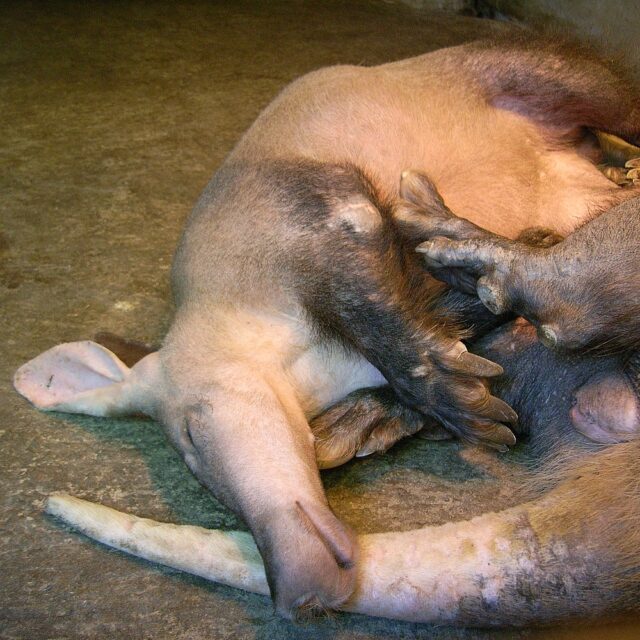
Aardvark spiritual meaning: quick guide
| Core meanings | Hidden work, persistence, creating refuge, specialization, patience and building foundations |
| Shadow meanings | Isolation, excessive retreat, digging without direction and becoming invisible inside your own work |
| Spirit animal lesson | The work done out of sight can create shelter and opportunity far beyond yourself |
| Best way to read an encounter | Start with behavior and context, then use symbolism as reflection rather than prediction |
What does a Aardvark symbolize?
Aardvarks spend much of their active time at night, using smell and digging ability to locate and open insect nests. The long sticky tongue then gathers prey. This combination of nocturnal searching and excavation naturally supports themes of hidden labor, persistence and the discovery of resources below the obvious surface.
The burrow is even more symbolically important. Aardvarks create shelters for themselves, but research summarized by South Africa’s biodiversity authorities notes that numerous vertebrate species may use Aardvark burrows. This is why the animal can be described as an ecosystem engineer: its ordinary activity changes the habitat in ways that create opportunities for others.
The shadow side is remaining underground metaphorically long after the foundation is finished. Private work is valuable, but invisibility can become avoidance. Aardvark symbolism therefore combines respect for unseen labor with the question of when it is time to emerge.
Aardvark as spirit animal, totem and power animal
As a modern spirit animal, Aardvark can symbolize long periods of unglamorous work: building infrastructure, researching, developing skill, making a home safer or creating systems that will support other people later. The reward may not be immediate recognition. The value is structural.
As a power-animal image, Aardvark emphasizes excavation and refuge. It can support reflection when you need to dig into a difficult subject, remove hardened material, or create a protected place in which recovery and future activity are possible.
People drawn to Aardvark symbolism may be independent, persistent and comfortable working when nobody is watching. The shadow can become social withdrawal or the belief that worth depends on constant labor. A healthy Aardvark symbol creates shelter but still leaves the burrow to forage and participate in a larger landscape.
The terms spirit animal, totem and power animal are frequently blended together in contemporary spirituality, but they are not historically identical. “Totem” belongs to culturally specific Indigenous systems and should not be treated as a universal synonym for a personal animal symbol. Here the Aardvark is discussed primarily as a modern symbolic and reflective figure. For the terminology itself, see Spirit Animals, Totems & Power Animals.
What does it mean when you see a Aardvark?
Aardvarks are generally nocturnal, so direct sightings are uncommon for many people even within their range. Tracks, burrow entrances or signs of digging may reveal their presence more often than the animal itself. Symbolically, this mirrors the Aardvark theme: effects can be visible before the worker is.
An Aardvark digging can symbolize investigation or foundation-building. One entering a burrow can emphasize retreat and safety, while emerging can suggest returning to visible life after a period of hidden preparation. In cold conditions they may sometimes be active outside the usual nighttime pattern, which is another reminder that behavior must be interpreted within ecological context.
In dreams, digging beside an Aardvark can suggest deliberately searching beneath a surface problem. An empty burrow may symbolize a shelter or system inherited from someone else’s work. Becoming trapped underground can represent over-identification with private labor or avoidance of exposure.
An encounter does not prove that a supernatural message has been sent. The useful approach is to ask first what the animal is actually doing and why it may be present, then notice whether the encounter mirrors a real question in your life. Context gives symbolism precision.
Aardvark in folklore, culture and modern symbolism
Aardvarks live across a wide area of sub-Saharan Africa, a region containing thousands of distinct communities and traditions. There is no responsible basis for reducing that diversity to a single “African Aardvark meaning.” Specific folklore should be connected to a named community and source rather than generalized.
Contemporary symbolism can instead draw securely from ecology. The Aardvark’s role as a digger and potential ecosystem engineer gives it a meaning that does not require invented ancient claims: one animal’s search for food can leave behind refuge for mammals, birds, reptiles and other creatures. Modern conservation sources also note that persecution, land use and climate-related changes can affect local populations.
Species and behaviors: how the symbolism changes
The living Aardvark, Orycteropus afer, is the only living species in its order, Tubulidentata. Despite superficial resemblance and the shared habit of eating ants and termites, it is not simply an African Anteater. Its evolutionary history, teeth, anatomy and relationships are different.
Behavior supplies the useful symbolic variants. Feeding emphasizes specialization; deep digging emphasizes persistence; creating a burrow emphasizes refuge and foundations; abandoning a burrow that later shelters other species emphasizes legacy. Night activity suggests work outside ordinary visibility, while emergence marks the return from preparation to action.
The practical lesson of the Aardvark
The Aardvark asks you to evaluate the infrastructure beneath your visible results. What are you building that will still be useful when you are no longer actively maintaining it?
- Invest in foundations that reduce future friction.
- Do not dismiss invisible labor merely because it attracts little attention.
- Build refuges and systems that other people can use safely.
- Know when the digging stage is complete and it is time to emerge.
The deepest Aardvark symbolism is legacy through structure. A burrow begins as one animal’s practical solution, yet its value can extend across an ecosystem. Quiet work can have a larger radius than the worker sees.
For the wider animal cluster, continue with Mammal Symbolism. Animal symbolism works best when it deepens observation rather than replacing it: the real animal supplies the pattern, documented culture supplies historical context, and the modern spiritual reading becomes a tool for reflection.
References
Web References
- https://animaldiversity.org/accounts/Orycteropus_afer/
- https://speciesstatus.sanbi.org/assessment/last-assessment/2287/
- https://www.sanbi.org/
Image Reference
https://commons.wikimedia.org/wiki/File:Orycteropus_afer.jpg