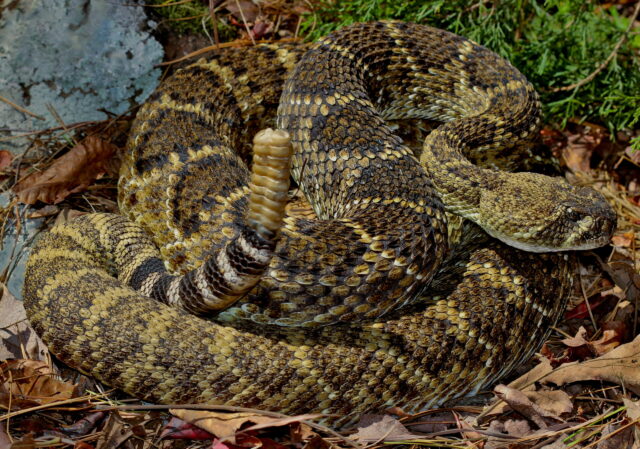
The Rattlesnake spiritual meaning is strongly connected with warning, boundaries and controlled power. Rattlesnakes possess a specialized rattle formed from interlocking keratin segments at the end of the tail. The sound can warn large animals away before close contact occurs. That makes the Rattlesnake one of the clearest biological symbols of escalation with communication: signal first, defend if necessary.
This guide separates real biology, documented cultural material and modern spiritual interpretation. That distinction keeps the animal itself visible and prevents recent symbolic ideas from being presented as universal ancient beliefs.
Rattlesnake spiritual meaning: quick guide
| Core meanings | Warning, boundaries, transformation, restraint, vigilance, life force and consequences after ignored signals |
| Shadow meanings | Threat inflation, fear, intimidation, reactivity and using warnings as a way to control others |
| Spirit animal lesson | A clear warning is valuable because it can prevent a conflict from becoming physical |
| Best method | Start with behavior and context; use symbolism as reflection rather than prediction. |
What does a Rattlesnake symbolize?
The rattle is the defining symbolic feature. It does not make the snake more dangerous; it makes danger more communicative. Spiritually, this supports the idea that boundaries work best when they can be recognized before consequences arrive.
Rattlesnakes are ambush predators that often conserve movement and wait for prey. This introduces patience, energetic restraint and attention to timing. Power does not require constant activity.
Like other snakes, rattlesnakes shed their skin, reinforcing themes of growth and transformation. But the rattle itself grows by adding segments across sheds, which creates a second image: change can leave a visible record rather than erasing the past completely.
The shadow meaning is intimidation. A warning system becomes unhealthy when it is used constantly to keep everyone afraid rather than to protect a real boundary.
Rattlesnake as spirit animal, totem and power animal
As a modern spirit animal, Rattlesnake can become relevant when you need to communicate a limit clearly before resentment turns into confrontation. It asks whether the people around you actually know where the line is.
As a power-animal image, Rattlesnake represents contained consequence. It is useful symbolically when you need calm authority: the capacity to act is present, but unnecessary escalation wastes energy and increases risk.
People drawn to Rattlesnake symbolism may identify with intensity, independence and strong personal boundaries. The shadow is treating every approach as intrusion.
The animal also teaches respect for warning signals in others. Spirituality should not become a justification for ignoring an animal’s rattle or a person’s explicit boundary.
Modern spiritual writing often merges spirit animal, totem and power animal. These terms are not historically interchangeable. “Totem” belongs to culturally specific Indigenous traditions, so this page uses the Rattlesnake primarily as a contemporary symbolic figure. For terminology, see Spirit Animals, Totems & Power Animals.
What does it mean when you see a Rattlesnake?
If you encounter a rattlesnake, increase distance and follow local wildlife guidance. Never approach for a photo or symbolic experience. The practical warning is the message that matters first.
Symbolically, hearing the rattle before seeing the snake can represent consequences becoming perceptible before the underlying issue is fully visible. A basking rattlesnake may emphasize energy regulation and stillness; a snake retreating emphasizes that avoidance of conflict is often the preferred outcome.
In dreams, Rattlesnake imagery often fits themes of warning, fear, boundary violation or concentrated power. A rattle that no one listens to may symbolize repeated ignored signals. A calm snake at a distance can represent respect between separate territories.
A sighting is not automatic proof of an omen. First ask why the animal is present and what it is actually doing. If the experience still feels meaningful, use it as a mirror for a real issue in your life.
Rattlesnake in folklore, culture and older symbolism
Rattlesnakes have important and highly varied meanings in Indigenous traditions across North America. These meanings are nation-specific and should not be reduced to one “Native American Rattlesnake meaning.”
In early United States political imagery, the rattlesnake became a symbol of vigilance and defensive resistance, famously appearing with the phrase “Don’t Tread on Me.” That is a documented modern political-symbolic use distinct from Indigenous traditions.
Contemporary spiritual interpretation often emphasizes warning and transformation because those themes are directly supported by the animal’s rattle and shedding cycle.
Species and behaviors: how the meaning changes
There are many rattlesnake species with different habitats and behavior. The western diamondback shown here is a large southwestern species. Timber rattlesnakes, prairie rattlesnakes and pygmy rattlesnakes occupy different ecological settings.
Behavior matters more than a generic label: rattling emphasizes warning; coiling emphasizes readiness; retreat emphasizes conflict avoidance; basking emphasizes thermoregulation and restoration; shedding emphasizes growth.
The practical spiritual lesson of the Rattlesnake
- State important boundaries before frustration makes them explosive.
- Respect warnings given by others.
- Keep consequences proportional to the actual threat.
- Use stillness as preparation, not paralysis.
- Remember that transformation can preserve memory rather than erase it.
The deepest Rattlesnake lesson is communicative power: the best defense may be the one clear enough to prevent the fight.
For the wider cluster, continue with Reptile Symbolism. Accurate biology provides the pattern; documented history provides context; the spiritual layer remains clearly identified as interpretation.
References
- https://animaldiversity.org/accounts/Crotalus_atrox/
- https://www.californiaherps.com/snakes/snakes.html
- https://www.floridamuseum.ufl.edu/florida-snake-id/
Image Reference
https://commons.wikimedia.org/wiki/File:Western_Diamondback_Rattlesnake_(Crotalus_atrox).jpg