Excavations at the Laohudun cemetery in Yunmeng County, Hubei Province, have brought to light 622 inscribed bamboo and wooden slips dating to the Qin and early Han periods. Chinese heritage reporting in mid-November 2026 described the exceptional preservation of texts covering military supplies, calendars, household instruction and auspicious dates for religious activities.
The cemetery was used across a period of major political transition, from the last centuries of the Warring States era into the early Western Han dynasty. Waterlogged graves created conditions in which fragile wood and bamboo survived long after such materials would normally have decayed. Excavators also recovered lacquerware and other grave goods from the tombs.
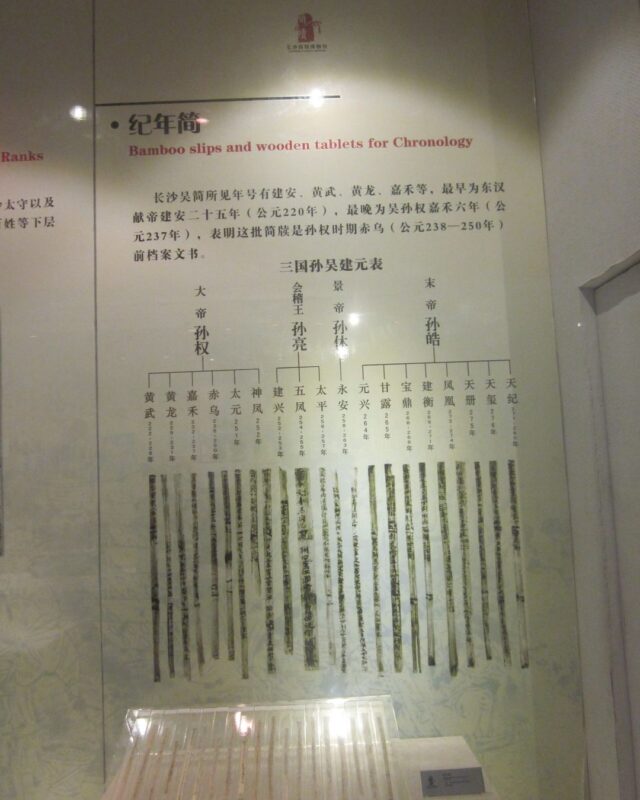
Ancient Chinese officials wrote many records on thin strips of bamboo or wood tied together into manuscripts. Unlike an inscription carved into a monument, a collection of slips may contain the ordinary information that made administration possible: inventories, measurements, personnel and supplies. Their survival provides a rare view of work typically hidden behind the histories of emperors.
Preliminary reports also describe calendars and advice on choosing favorable days for ceremonies and other activities. Such material is significant for the history of divination because it illustrates how decisions could be placed within a traditional calendar of auspicious and inauspicious moments. It does not establish whether the methods predicted events reliably by modern scientific standards.
Other reported writings concern medical advice and the instruction of women, showing that the collection is not limited to government business. These texts may help scholars investigate the transmission of norms within households and the interaction between moral teaching, ritual practice and social hierarchy.
Reading the documents will require conservation, transcription and comparison with established manuscripts. Characters can be damaged, columns incomplete and a preliminary identification revised as specialists work through the material. The phrase ‘lost wisdom’ can obscure that historical process: the research goal is to understand exactly what the writers recorded and how the documents were used.
Templum Dianae recently discussed new efforts to read ancient inscriptions. The Yunmeng slips highlight why context and philological expertise remain essential even when technology assists the study of historical texts.
References